

09 Nov
2026
A gift can say, “I see your effort,” without making recovery feel like a performance. Five meaningful gift ideas for someone starting a recovery journey include a sober shared experience, a wellness ritual, recovery-focused reading, a practical comfort gift, and a personalized care basket. Each can suit someone in a 12-step program when it respects their preferences and supports their own path.
It’s natural to wonder whether a gift might feel too personal or make assumptions about someone’s recovery. Focus on care, not advice or pressure. A thoughtful note, a calming activity, or something chosen around their interests can make the gesture feel warm and genuine.
Here, you’ll find ways to tailor each idea, from choosing a relaxed outing to building a basket with comforting, useful touches. You’ll also find gentle guidance for considering 12-step traditions and personal boundaries, so your gift can celebrate their strength without defining their journey for them.
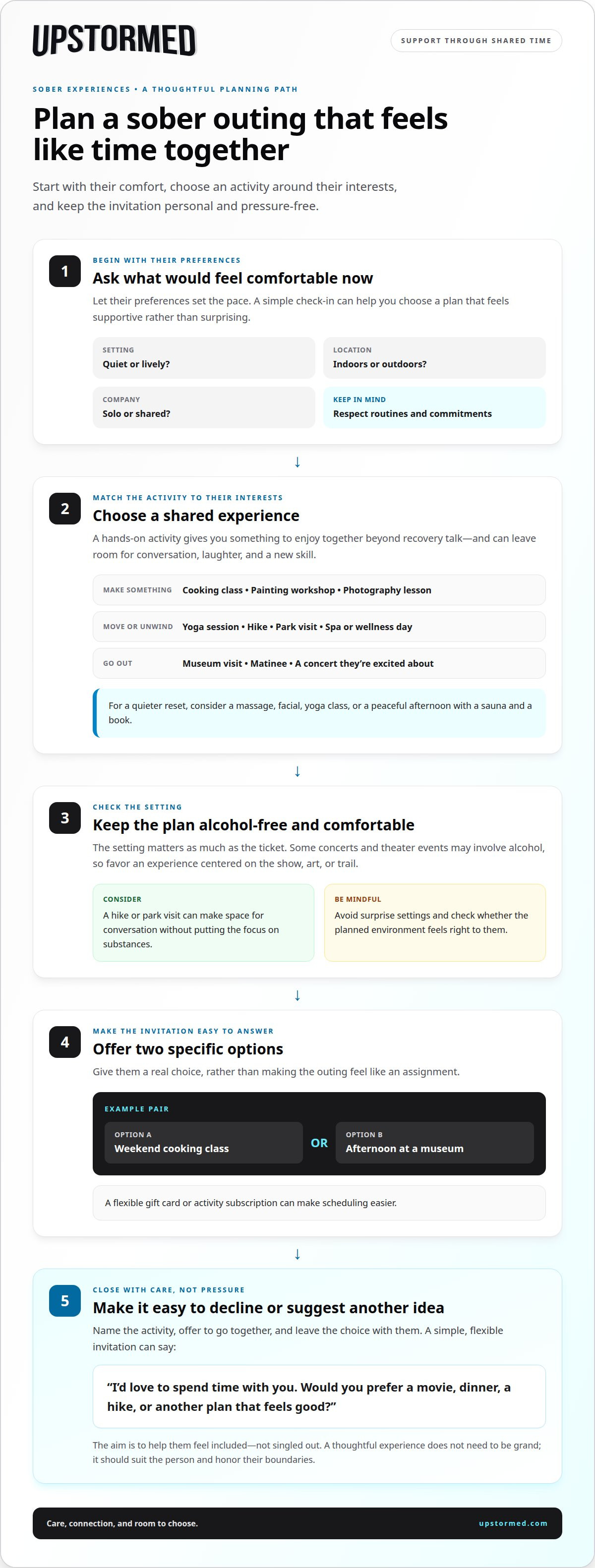
A shared experience can turn support into a lasting memory. Choose a cooking class, painting workshop, photography lesson, or yoga session that matches their interests. A hands-on activity gives you something to focus on together beyond recovery talk, with room for easy conversation, laughter, and a new skill to take home.
Make the invitation feel personal, not like an assignment. Offer two specific options, such as a weekend cooking class or an afternoon at a museum. Let them choose the activity and the pace. If they’re in a 12-step program, respect the routines and commitments that matter to them. A flexible gift card or activity subscription can make scheduling easier.
Shared plans can matter around celebrations, too. If they’re avoiding an event where alcohol may be present, suggest a movie, dinner, hike, or road trip instead. Give the plan a clear shape: name the activity, offer to go together, and make it easy to decline or suggest another idea. That message says, “I want time with you,” without demanding an explanation.
For an alcohol-free outing, choose a museum visit, a matinee, a concert they’re excited about, or a day outdoors. The setting matters as much as the ticket. Some concerts and theater events may involve alcohol, so favor an experience centered on the show, art, or trail. A hike or park visit can make space for conversation without putting the focus on substances.
A spa or wellness day can offer a quieter kind of reset. Consider a massage, facial, yoga class, or peaceful afternoon with a sauna and a book. Keep the gift focused on rest rather than appearance or self-improvement. A simple invitation to share the day can feel more supportive than a package that expects them to follow a strict schedule.
Cooking is another useful experience because it pairs creativity with a practical activity. Choose a class built around a cuisine they love, or plan a relaxed meal-prep afternoon at home. Let them pick the recipe, music, and menu. The aim isn’t to prescribe a new lifestyle, but to enjoy making something together and create a positive memory around food.
Before booking, ask what kind of outing would feel comfortable now: quiet or lively, indoors or outdoors, solo or shared. Keep alcohol out of the plan and avoid surprise settings. A thoughtful experience doesn’t need to be grand. It should suit the person, honor their boundaries, and help them feel included rather than singled out.
A useful wellness gift supports a routine without turning recovery into a project. Consider a journal with prompts for gratitude, progress, and personal goals, or a planner with room for daily reflections. If a blank page feels daunting, a one-line journal offers a simple start: write a thought, feeling, or intention each day. Pair it with a pen and a brief note recognizing their effort.
For a calming ritual, consider a meditation cushion, a soothing eye mask, or a simple tea set. A healthy cookbook can also inspire nourishing meals without dictating what someone should eat. Make the gift personal by choosing a format they already enjoy, such as guided writing instead of open-ended pages. The right gift feels like an invitation, not an instruction.
Inspirational gifts work best when they speak to the recipient’s own values. A sincere card, a small keepsake engraved with “hope” or “courage,” or a framed personal affirmation can offer encouragement without making promises about recovery. If they welcome spiritual language, choose words that fit their beliefs. If they prefer a practical tone, celebrate their persistence instead.
Recovery stages and preferences differ, so tailor the gesture to what feels appropriate now. Someone new to sobriety may appreciate a private journal or a calming bedtime routine. A person marking progress may value a keepsake tied to a meaningful date. In 12-step programs, traditional tokens can mark milestones such as 24 hours, 30 days, 60 days, 90 days, 6 months, 9 months, and yearly anniversaries. Ask whether they’d welcome a celebration before making the date the focus.
Milestone gifts can be personal and low-pressure. A sobriety-date bracelet or keychain offers a tangible reminder, while a handwritten letter can name specific qualities you admire. Keep the message focused on the person, not predictions about what comes next. Therapy and recovery can involve private work, so avoid gifts that expose someone’s history or invite them to explain it publicly.
Avoid alcohol- or drug-related gifts, including items that glamorize substance use or turn it into a joke. Large sums of cash can also feel overwhelming or triggering, so choose a practical, thoughtful alternative.
Self-expression can be part of a personal gift, too. A beach dress for a confident look may suit someone who enjoys choosing their own style. Let their taste lead; a keepsake should affirm their individuality, not define their recovery.
A carefully chosen book can offer fresh language for change without demanding a conversation. Among meaningful gift ideas for someone starting a recovery journey, recovery memoirs, personal-growth guides, and mindfulness books each offer a different reading experience. The right match depends on what the person enjoys: lived stories, practical exercises, or reflective ideas. Choose based on their interests, not assumptions about what addiction recovery should look like.
For someone drawn to personal stories, consider a memoir about rebuilding relationships, finding purpose, or facing setbacks. Read the description together or ask which themes they’d welcome before choosing. Candid accounts can feel powerful, but intense material may not suit everyone. A simple note such as “I thought you might enjoy this” shares your intention without suggesting the book explains their experience.
Books about building habits can turn broad intentions into manageable actions. Look for clear examples, such as planning a morning routine, making time for a hobby, or reflecting on a challenging day. A workbook with short exercises may suit someone who likes to put ideas into practice. A reader who prefers brief, encouraging passages may find a dense guide less appealing.
Mindfulness books offer another option for someone curious about attention, breathing, or self-compassion. Choose an accessible guide with simple practices and plain language. Present it as a collection of ideas to explore, not a cure or replacement for professional support. The reader can decide what feels useful and what doesn’t.
For someone in a 12-step program, their reading preferences should lead. They may welcome program-related literature, a personal story, or a book about relationships and growth. Don’t assume every recovery title fits every program or aligns with someone’s beliefs. A quiet question about what they enjoy reading can help you choose without making the present feel like a lesson.
Format matters, too. A paperback travels easily, while an audiobook can suit someone who enjoys listening during everyday tasks. An e-book may appeal to a person who prefers reading on a device. Add a bookmark and a short note explaining one specific reason you picked it, such as the author’s hopeful tone or the book’s practical exercises.
A book can be one of the meaningful gift ideas for someone starting a recovery journey when it feels like an invitation, not homework. Skip notes such as “read this and you’ll understand,” and don’t mark chapters for them. Instead, write a private message celebrating their effort and respecting their privacy. Let the gift stand on its own, without requiring a response or a promise to finish it.
A self-care basket feels personal when every item has a clear purpose. Start with a practical base, such as a reusable tote or small box. Add comfortable socks, skincare, a manicure kit, or a gentle bath product. A healthy snack and comforting tea can make the package feel welcoming. Choose familiar, everyday comforts rather than items that imply the recipient needs fixing.
Build around one simple theme. For a quiet evening, combine herbal tea, a soft eye mask, and a handwritten note. For a fresh-start morning, choose a reusable cup, nourishing snacks, and a small planner. A fitness-minded recipient might appreciate practical workout accessories. Keep the focus on their preferences, not on prescribing a routine or setting expectations for healing.
Personal touches make a care package more than a collection of products. Add a note naming something you admire, such as their honesty, patience, or commitment to taking the next step. Include a favorite snack, familiar tea, or comforting scent they already enjoy. This kind of message can encourage strength without asking them to share private details about recovery.
Add a handwritten card or personal note to make the gesture warmer. Other simple choices include a favorite snack, tea, or a small self-care item. Focus the gift on what they enjoy, rather than trying to assemble a complete recovery plan.
Consider how the package will feel to open. Arrange the items so the note sits on top, then group useful things together: tea beside a mug, or skincare beside a soft washcloth. Avoid alcohol-related products and anything that turns substance use into a joke. Skip large amounts of cash, too. A small, considered selection can communicate care without overwhelming the recipient.
Ask about preferences in a low-pressure way before assembling the basket. “Would tea or snacks feel more useful?” gives them room to guide the choice. For someone who enjoys movement, fitness clothing or simple exercise accessories may suit their interests. For someone who prefers quiet comforts, choose a book light, cozy socks, or a favorite treat instead.
There’s no single perfect gift for everyone. Choose items that feel safe, familiar, and genuinely useful to this person. A basket can celebrate progress without turning a private journey into a public announcement. Keep the message simple: you care, you’re proud of their effort, and you’re there to encourage them.
A personalized basket works best when it reflects the recipient, not a recovery stereotype. Start with one theme they already enjoy: quiet evenings, creative projects, nourishing snacks, or everyday comfort. Then select a few items that belong together. A favorite tea, a puzzle book, and a handwritten note feel more considered than a pile of unrelated products.
Use a simple plan: choose a useful anchor item, add two small personal touches, then write a private message. For a wellness theme, the anchor might be a journal, with a favorite snack and soothing eye mask alongside it. For someone who enjoys making things, choose a sketchbook and pencils. Specific choices show that you notice their interests beyond recovery.
How can you personalize a recovery gift while respecting privacy? Choose items around hobbies and preferences, not assumptions about their history, and keep the note private. Avoid labeling the package with sobriety language or including anything that could reveal personal information to others.
A good basket can also solve a small, everyday need. Add a healthy snack they already like, a reusable cup, or a ten-dollar gift card to a local coffee shop. If they enjoy movement, consider a practical fitness accessory; if they prefer rest, choose a soft sleep mask or an unscented massage ball. Let their comfort and taste guide each choice.
Make the presentation creative without turning it into a public announcement. A simple box, reusable tote, or favorite color can make the package feel personal. Place the note where it’s easy to find, and keep the outside neutral if the gift will be delivered somewhere shared. A private message can celebrate their strength without asking them to explain their journey.
Personalization also means leaving room for choice. A gift card for a familiar café, bookstore, or hobby shop gives them control over what feels useful. Pair it with a short note such as, “I’m glad you’re in my life.” Skip language that sets expectations or treats recovery as a promise of a particular outcome.
To find the perfect combination, think about one thing they genuinely enjoy, one comfort they use, and one way to make the gesture feel like theirs. A basket can encourage connection without turning into advice. If clothing is part of their personal style, explore a style gift they can choose for themselves. Keep the emphasis on individuality, not on defining who they are.
Upstormed Shop offers apparel that can add a personal-style touch to a supportive gift. If the person enjoys choosing clothes that reflect their identity, consider women’s jeans, activewear, a beach dress, or swimwear. The right choice is personal, so let their tastes and comfort guide the gesture. A clothing gift can celebrate individuality without making recovery the whole story.
Pair the item with a private note that recognizes their strength or simply says you’re glad to be there. Focus on what they enjoy, not on what you think they should wear or how they should feel. A thoughtful gift supports their sense of self while leaving their journey in their hands.
For apparel that feels aligned with their style, explore Upstormed Shop’s selections. If you’d like to discuss a gift, contact Upstormed Shop.
The strongest gesture leaves room for the person to define what progress means. Choose something that respects their preferences, protects their privacy, and reminds them they’re valued beyond recovery. Thoughtful gifts can affirm who someone is today without placing expectations on who they should become.
Choosing meaningful gift ideas for someone starting a recovery journey is also a chance to recognize their individuality. For someone who enjoys expressing themselves through clothing, Upstormed Shop offers Ripped Slimming Jeans For Women, a beach dress, and yoga fitness leggings. Let their personal style guide whether apparel feels right for them.
If you’d like to explore a style-focused gift or discuss your options, contact Upstormed Shop. A sincere gesture can say a lot. Keep showing up with respect, warmth, and belief in their strength.
Yes, a gift can suit someone in a 12-step program if it respects their beliefs and personal boundaries. Program participation doesn’t mean everyone wants recovery-themed items or public recognition. A neutral gift tied to an everyday interest can feel comfortable. If you’re considering a token or program-related item, ask whether they would welcome it, and let their answer guide your choice.
A good sobriety gift reflects the recipient’s personality and the occasion, rather than making assumptions about what they need. For a private gesture, write a note naming a quality you value, such as their humor or persistence. If they’re celebrating a recovery date, let them choose whether they want that moment recognized. The best present feels affirming, not like a measure of their progress.
Thoughtful gifts for someone beginning addiction recovery can make ordinary days feel more supported. Offer a specific practical gesture, such as running an errand together or helping organize a comfortable reading corner. Keep the offer easy to accept or decline. Don’t ask for personal details as part of giving; care doesn’t require someone to explain their experiences or share more than they choose.
Choose a present connected to an interest they already enjoy, such as gardening, music, or a favorite sport. Keep the wrapping and card free of sobriety slogans unless they’ve said they like that style. A simple message such as “I appreciate having you in my life” shows warmth without turning the gift into commentary on their choices or history.
Practical gifts can make everyday routines easier without taking over someone’s decisions. Consider a sturdy lunch container, a desk organizer, or a calendar they can use in their own way. A grocery or transit gift card may help with a specific daily need. Ask what would be useful before choosing, and don’t attach conditions or expectations to the gift.
Helpful self-care gifts offer comfort and choice. A soft blanket, gentle hand cream, or simple coloring set can create a small moment of ease at home. Choose familiar scents and textures rather than strong fragrances or elaborate routines. Add a note that lets them use the gift whenever it suits them, without suggesting they must follow a particular wellness practice.
Books or journals can be good gifts when the person enjoys reading or writing. Before choosing, ask what topics or formats they prefer, or offer a gift receipt so they can select something themselves. A journal with undated pages gives them flexibility to write when it feels right. Don’t mark passages or add prompts about personal experiences unless they’ve welcomed that involvement.
For inpatient treatment, follow the facility’s rules for gifts and personal belongings, and choose something compact and easy to store. For outpatient treatment, a practical item for daily routines may fit better, such as a meal container or simple tote. In either setting, avoid gifts that demand public attention. A private card lets the person receive your support on their own terms.

Article by
Jonathan Anthony Burkett
Jonathan Anthony Burkett was born in 1987. He is a bright writer inspired by many, as he continues to struggle in life. Devoted for achievement in his lifetime, he is willing to take any test. He told himself, that he would never give up no matter the trials and tribulations. He decided to write to help him move towards a bright future for himself; and because he knows that s what his Grandparents want for him.
Learning now that life is a challenge for many, with trials, tribulations, brutality, hatred, along with grief and manipulation. Jonathan is writing now to release his thoughts about life, after being motivated, inspired to prosper, encouraged to tolerate, uplifted, and empowered from his past.

A planning reflection for Te Papa’s forthcoming playable exhibition, opening December 12, 2026, i...

The 2026 Golden Horse nominations offer a starting point for paying closer attention to sound cre...

An existing museum resource offers a way to separate surviving evidence, reconstruction and unans...

 Account
 Cart