

26 Nov
2026
Your postpartum swimwear rotation should offer more than one way to feel comfortable. Choosing flattering swimwear cuts for postpartum confidence starts with what you need today: a one-piece for continuous coverage, a tankini for flexible separates, or a bikini for mix-and-match freedom. As your body changes, your swimwear can adapt too.
Wanting support or coverage doesn’t mean you lack confidence. It means knowing what helps you feel like yourself. Choose a soft, comfortable fit rather than feeling pressured to hide or reshape your body.
Here, you’ll compare one-pieces, tankinis, and bikinis, with practical details like adjustable straps, high-waisted bottoms, and ruching to help guide your choice. You’ll also learn how to build a useful rotation for different moods and plans. Find the cuts that feel good, then step into the sun on your terms.
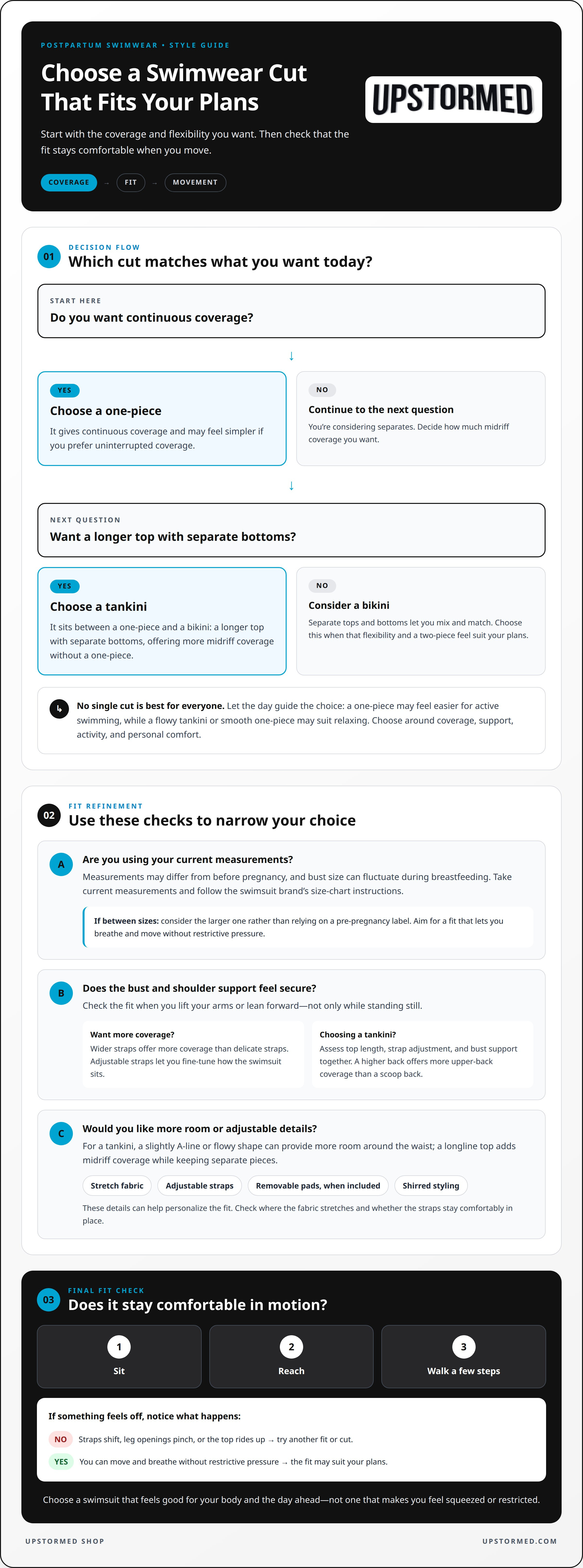
A one-piece provides continuous coverage, while a bikini lets you pair separate tops and bottoms. A tankini falls between the two, with a longer top and separate bottoms. Start by deciding what matters most for your plans: coverage, flexible styling, or a two-piece feel. For example, a tankini can offer more midriff coverage without a one-piece.
After pregnancy, your measurements may differ from before, and your bust size can fluctuate during breastfeeding. Take your current measurements and follow the swimsuit brand’s size-chart instructions. If you fall between sizes, consider the larger one instead of relying on your pre-pregnancy label. A comfortable fit should let you breathe and move without restrictive pressure.
Next, assess support at the shoulders and bust. Wider straps offer more coverage than delicate straps, while adjustable straps let you fine-tune how the swimsuit sits. A supportive top can be especially useful when your bust feels different from day to day. Check that it feels secure when you lift your arms or lean forward, not just smooth while standing still.
For a tankini, assess the top’s length, strap adjustment, and bust support together. A slightly A-line or flowy shape can provide more room around the waist, while a longline top adds midriff coverage without giving up the flexibility of separates. Adjustable straps help you fine-tune the fit. If you prefer more coverage across your upper back, look for a higher back rather than a scoop back.
Stretch fabric and adjustable details can help a swimsuit adapt as your body changes. Removable pads, when included, let you adjust the feel of the top, while shirred styling can offer a more flexible fit. Check where the fabric stretches and whether the straps stay comfortably in place. A tankini with adjustable straps and gentle gathering, for example, gives you more than one way to personalize the fit.
Test the fit through movement, not just by checking the mirror. Sit, reach, and walk a few steps in each cut. Notice whether the straps shift, the leg openings pinch, or the top rides up. For an active pool day, secure support may matter most. For relaxing, you might prefer a flowy tankini or a smooth one-piece. Choose the cut that suits your body and the day ahead.
A swimsuit cut can’t determine when it’s safe to swim after birth. Base the timing on your recovery and healing, especially around an incision. Tummy-control fabric isn’t a readiness test.
A tummy-control one-piece can smooth and shape the midsection through its construction. Treat that as a fit preference, not a requirement or a way to erase your postpartum body. The panel should feel supportive, not restrictive. If it presses uncomfortably when you sit or bend, try another cut or size. Comfort comes first.
Ruching gathers fabric across the front, adding texture and softening the outline of the tummy. Diagonal or crisscross ruching can create vertical visual lines, while gathers centered at the front can define the waist. Compare a plain front with diagonal ruching in the same mirror and lighting. Notice which details suit your style instead of searching for a rule about what looks flattering.
Textured fabric offers another way to add visual interest while keeping the coverage of a one-piece. A wrap front or peplum detail can draw attention toward the waist, while asymmetrical straps add a distinct design feature. These details can make a swimsuit feel expressive without requiring a lower neckline or higher leg. Choose a feature you enjoy, then consider whether the overall cut feels easy to wear.
One-piece, tankini, and bikini silhouettes each offer different styling choices. A one-piece creates a continuous line, while a tankini pairs a separate top and bottom. Bikini pieces can be mixed and matched, while a one-piece may feel simpler if you prefer uninterrupted coverage. Compare a smooth one-piece with a ruched version, then try both against a tankini. There’s no universally best style; choose what suits your comfort and plans.
Use a simple movement check to assess tummy-control styles. Sit, reach overhead, and bend gently. Notice whether the fabric digs in, the ruching shifts, or the leg openings pull. A swimsuit that looks smooth while standing may feel different in motion, so check the front panel from the side and while seated too. If it stays comfortable through these movements, its shaping details may suit your day.
Choose the details that serve you, not the ones that promise a new silhouette. For a bold, layered beach look, a see-through beach dress can be worn over swimwear when you want an extra layer between swims.
Swimming is safe when your recovery and healing, especially around any incision, make you ready. A swimsuit’s style or tummy-control fabric can’t determine that.
Build a rotation around the swim days you actually have. A tankini can suit a family pool visit when you want a longer top and separate bottoms. A one-piece may feel easier for active swimming, while a bikini offers mix-and-match flexibility. Choose according to activity, coverage, and support, not pressure to own every silhouette.
For bust support, compare a built-in shelf bra, molded cups, and underwire. A shelf bra offers gentle lift, molded cups add shape, and underwire provides more structured support. Removable cups let you adjust the feel of some tops. For example, a bikini top with removable pads may suit lounging, while a supportive tankini may feel steadier for swimming. Choose the construction that feels secure without digging in.
Necklines affect both coverage and how a top sits. Scoop and square necklines are options for supportive bikini tops, and wider straps may feel more comfortable than delicate strings during a long pool day. If you prefer a higher neckline, check how it feels when you reach and move. A top that stays comfortably in place matters more than choosing a silhouette for appearance alone.
Affordable postpartum swimwear is easiest to assess by comparing useful features, such as coverage, support, and removable cups. Typical prices vary with fabric, construction, and included support, so focus on the details you’ll use rather than extras you don’t need.
Let your planned activities guide your rotation. For a relaxed beach day, you might prefer a bikini with a supportive top; for a swim lesson, a tankini or one-piece may offer the coverage you want. If you’ll be moving in and out of the water, consider whether the swimsuit is easy to put on and remove. One cut doesn’t need to suit every moment.
Choose each piece for comfort and a distinct purpose. Try the top with its cups in, then remove them if the design allows; notice how the support and coverage change. Reach forward, sit, and walk a few steps to see whether straps shift or seams press. A practical rotation might include pieces for more bust support, extra coverage, or easier movement. Your preferences can change from one swim day to the next.
High-waisted bikini bottoms provide more lower-abdomen coverage while retaining the flexibility of separates. This can be useful after pregnancy if you want to choose your top and bottom independently. A higher rise may cover an area you’d rather keep out of the sun or simply help you feel less aware of it. Coverage is your choice, not a rule about which bodies should wear bikinis.
Pay attention to where the waistband sits. High-rise bottoms should cover the area you want covered without rolling, pinching, or digging in as you move. Sit, bend, and take a few steps to see whether the waistband stays comfortably in place. If the edge presses into your stomach when you sit, a different rise or size may feel better. How the bottoms move with you matters more than the mirror.
For a more continuous look, pair high-rise bottoms with a longer swim top. The extra fabric can offer one-piece-like coverage while retaining the flexibility of separates. A longline top, for example, can meet the waistband without leaving much midriff exposed. Choose a length that stays put when you reach or walk, rather than one that needs constant adjustment. Adjustable straps can help the top sit comfortably with your bottoms.
Some people prefer a swim dress or skirted bottom for more coverage around the hips and upper thighs. A swim dress creates a longer silhouette, while a skirted bottom keeps the two-piece format. You might choose a swim dress for relaxed time by the water or pair a skirted bottom with a supportive top. Check how the hem falls while standing and walking. A cut that feels comfortable in motion is more practical than one chosen for its shape alone.
Shopping gets easier when you decide what you want the bottoms to do. Do you want more lower-abdomen coverage, a waistband that stays secure while swimming, or a flexible outfit with a longer top? Set that priority first, then compare fabric stretch, waistband placement, and colors. A bright shade or simple solid can both work well, so let your taste lead. If you have a C-section scar, a higher rise may provide more coverage there if you prefer it.
Build an outfit around a real swim day. Pair high-rise bottoms with a top that feels secure for swimming, or choose a swim dress for a slower beach afternoon. Try the combination in motion: bend, sit, and walk. The right choice lets you focus on the water instead of readjusting your suit. Your coverage, your color, your call.
Start by considering what comfort means for your day. A suit for lounging may need different support from one for swimming or spending time with a child near the pool. Choose a neckline, coverage, and fit that let you move without constant adjustments. How you feel matters as much as how the suit looks.
Fabric makes a difference. Soft, stretchy material can move with your body, while strong compression may feel restrictive. A fully lined swimsuit adds a layer that helps maintain coverage when wet. Check how the fabric feels when you sit and reach, not only when standing. A smooth feel against your skin can make a suit easier to wear through a long beach afternoon.
Give straps their own fit check. Wider straps distribute weight more evenly across the shoulders than delicate strings, and thicker swim-top straps may feel easier to wear for longer periods. Move your arms forward and overhead. If a strap slips, digs in, or pulls at the neckline, the cut may not feel secure for swimming. Look for straps that lie flat and stay comfortable as you move.
Next, check the leg openings. They should sit securely without pinching or shifting excessively as you walk. Squat, sit down, and take a few steps. Notice whether the edges stay in place and the fabric pulls across your hips. A stylish cut still needs to feel good in motion. Small fit details can shape your whole day.
Think of compression as a preference, not a requirement. If you want a smoothing feel, choose a suit that supports without squeezing. If you prefer a lighter fit, soft stretch fabric can give you more freedom to move. Neither choice says anything about your body or confidence. It simply reflects what feels right for you now.
Use a simple fitting-room sequence: check the neckline, lift your arms, sit, squat, and walk. Then notice any rubbing, slipping, pinching, or pressure. If you’re unsure, repeat the same movements in another cut. A secure swimsuit should stay in place without demanding your attention. Trust what you feel, not a label or trend.
For a beach day, personal comfort can include what you wear over your swimsuit, too. A beach dress can add another layer to your outfit between swims. Explore a see-through beach dress as a stylish option for beachside wear.
After comparing cuts, coverage, and comfort, explore the swimwear at Upstormed Shop. Its Beach Bikini High-end Fashionable Solid-color Swim Trunks offering is a two-piece option to consider as you build a rotation around your preferences.
Use what you’ve learned to guide your choice: decide what coverage feels right, then consider how you want your swimwear to suit your plans. Choose what reflects your comfort and personal style, not someone else’s expectations.
For questions about the offering, contact Upstormed Shop.
Your relationship with swimwear can shift as your body and routines change. Let each new choice begin with how you want to feel, not an old size label or someone else’s idea of a flattering fit. Choosing flattering swimwear cuts for postpartum confidence is personal: notice what feels like you now, and give yourself room to change your mind.
Try a new cut for your next beach or pool day. Notice how it feels when you move, sit, and enjoy the moment. That experience can guide what you choose next, without turning getting dressed into a test you need to pass.
If you’re ready to explore your next swimwear choice, contact Upstormed Shop. Take your time, trust your comfort, and step forward in a style that feels like yours.
Build your rotation around the outings you expect rather than buying several suits for the same purpose. For a beach afternoon, you might choose a suit that pairs easily with a cover-up; for active pool time, prioritize freedom of movement. Keep pieces that work for different plans, and reassess as your preferences or fit change. A useful rotation supports real days, not an imagined wardrobe.
Choose the silhouette that best suits your comfort and plans. A one-piece provides continuous coverage, a tankini separates the top and bottom, and a bikini lets you mix pieces. If getting dressed quickly matters, consider which option feels easiest to put on and take off. If you want different coverage for your top and bottom, separates offer more flexibility. The best choice is the one you feel at ease wearing.
Look for a swimsuit that fits your body now and feels secure through everyday movement. Check whether the neckline stays comfortable, the fabric moves easily, and the seams and edges avoid rubbing. Reach, sit, and walk before deciding. If you plan to wear it for a full beach day, consider whether it’s easy to remove when changing. These practical details matter more than a label suggesting a particular body type.
No single bathing-suit style is slimming for everyone, and a swimsuit doesn’t need to change your shape to look good. If you like visual details, try a print or color that suits your personal style. A wrap-inspired front or textured panel can add interest, while a neckline or leg cut can change the overall impression. Choose what you enjoy seeing and wearing, not a promise to conceal your body.
The best swimsuit suits your current fit, coverage preferences, and planned activity. For a quiet day by the water, you may choose a relaxed style; for swimming, you may want a fit that stays comfortable as you move. If your measurements have changed, use your current measurements rather than relying on an older size. Let comfort lead, then choose the cut you like.
Flattering cuts depend on what you want from a swimsuit. A flowy tankini can provide extra waist coverage, while a longline top offers a two-piece option with more midriff fabric. A one-piece provides continuous coverage, and a bikini gives you separate pieces to style. If you’re choosing flattering swimwear cuts for postpartum confidence, start with how you want to feel, then compare how each cut suits your plans.
High-waisted bikini bottoms can provide more lower-abdomen coverage, but comfort depends on their fit and feel. Check that the waistband doesn’t roll or press uncomfortably when you sit. Pairing a higher rise with a longer top can create a more covered two-piece outfit. Try the combination in motion. If the waistband shifts or distracts you, another rise may feel more comfortable.
Ruching gathers fabric, while wrap styling creates angled lines, so both can add texture and visual interest across the midsection. Some people enjoy the softer outline these details create; others prefer a smooth front. Compare styles while standing and sitting, since gathers may look different as you move. Treat these features as design choices, not promises to hide your belly. Choose the detail you feel good wearing.

Article by
Jonathan Anthony Burkett
Jonathan Anthony Burkett was born in 1987. He is a bright writer inspired by many, as he continues to struggle in life. Devoted for achievement in his lifetime, he is willing to take any test. He told himself, that he would never give up no matter the trials and tribulations. He decided to write to help him move towards a bright future for himself; and because he knows that s what his Grandparents want for him.
Learning now that life is a challenge for many, with trials, tribulations, brutality, hatred, along with grief and manipulation. Jonathan is writing now to release his thoughts about life, after being motivated, inspired to prosper, encouraged to tolerate, uplifted, and empowered from his past.

Fondation Beyeler lists Estelle Costanzo performing John Cage on November 27 in its Ruth Asawa ex...

The temple’s official November 21–30 night-viewing schedule pairs a seasonal visit with specific ...

UNESCO’s November report describes a community-led inventory in Oaxaca. Original analysis asks ho...

 Account
 Cart