Black Friday to Cyber Monday: free shipping on $100+, 20% off orders over $150


21 Nov
2026
Chafing isn’t a test of toughness. It’s a sign that repeated friction needs a better barrier. Breathable workout tights that prevent inner thigh chafing can help by covering the area where your thighs rub, staying in place, and managing sweat as you move.
Runners know that even a strong stride can be interrupted by sore, irritated skin. The right clothing won’t make every workout friction-free, but a comfortable, close fit and quick-drying fabric can help reduce rubbing. Small choices matter, and comfort can help you keep moving.
Here, you’ll learn how runners reduce inner thigh chafing and what to look for in breathable tights. You’ll also compare leggings, compression and biker shorts, and running shorts with liners to find coverage and fit that suit your run. Less rubbing means more room to focus on the miles ahead.
Inner thigh chafing is skin irritation caused by repeated rubbing. During a run, each stride can bring your thighs together or move fabric against your skin. That friction may leave the area sore, red, or raw. Leggings create a layer between the thighs, but they don’t eliminate every source of rubbing.
Sweat, heat, and movement can make friction more uncomfortable. For example, damp leggings may cling and rub repeatedly across the same area of the inner thigh. As sweat evaporates, salt can remain on the skin and aggravate irritation. A long run in warm conditions can feel different from a short workout in cooler weather.
Fit matters, too. Leggings that are too small can stretch tightly across the thighs, while oversized leggings may shift or bunch during a run. Either can create new friction: fabric may pull at the inner seam, or folds may rub the skin with every stride. A garment that feels comfortable while standing may move differently when you walk or run.
Seams and fabric surfaces can create extra rubbing. A thick inner seam may press against the same area repeatedly, especially during cycling or a brisk walk. Loose fabric can slide across the skin, too. Even smooth leggings may irritate if they ride up and leave part of the thighs uncovered.
Material affects how clothing handles sweat. Cotton can absorb moisture and hold it against the skin, leaving a damp area where rubbing continues. Moisture-wicking performance fabric may help manage sweat, but it can’t compensate for poor fit, shifting fabric, or a seam that repeatedly contacts the skin.
Chafing can happen wherever skin rubs against skin or clothing. Common areas include the inner thighs, groin, underarms, nipples, and skin beneath a sports bra. Walking, hiking, running, and cycling all involve repeated movement, so irritation can develop during everyday activities as well as training.
Notice the pattern. If irritation appears along an inner seam, fabric movement may be contributing. If it appears where your thighs touch, skin-on-skin friction may be involved. These clues help explain why leggings reduce rubbing for some runners but not others. Coverage, fit, fabric, seams, sweat, and movement all play a part.
If your skin becomes raw, pause the workout that caused the rubbing and keep the area clean and dry while it heals. Gently cleanse chafed skin and pat it dry rather than scrubbing. If irritation doesn’t improve, becomes more painful, or shows signs of infection, contact a healthcare provider.
For 2026, runners can reduce inner-thigh chafing with close-fitting tights that cover the rubbing area and stay in place. For runners comparing breathable workout tights that prevent inner thigh chafing, prioritize moisture management, quick drying, and a smooth fit. These features help limit dampness and fabric movement during repeated strides.
The National Center for Biotechnology Information (NCBI) identifies high breathability, perspiration absorption, and fast drying as useful sportswear properties. Look for fabric descriptions that address these qualities, then consider how the tights feel in motion. A breathable label alone can’t tell you whether the waistband slips or the inner legs bunch.
Test the fit before a long run. Walk, bend, squat, and lift each knee. The fabric should cover the area where your thighs rub without pulling tightly or gathering into folds. If the tights move during these simple motions, they may shift further during a run. Stable coverage matters as much as moisture-wicking fabric.
When shopping for affordable breathable anti-chafing tights in the US, compare the listed price with fabric information, construction, and care instructions. Don’t assume a higher price means better breathability or durability. Look for details about moisture management and quick drying, then weigh them against the cost and the fit you need.
Popular tights can be compared by their stated fabric properties, visible construction, and retail price. Breathability relates to how the material handles heat and perspiration; durability depends on how well the garment maintains its surface and fit with wear. Check for smooth inner-thigh construction and follow care directions to help preserve stretch and moisture-management properties.
To prevent rubbing while wearing tights, cover the full friction area and keep the fabric from shifting. Before running, applying petroleum jelly or an anti-chafe product to the inner thighs can create a low-friction barrier. For runs longer than about 90 minutes, runners should reapply anti-chafe products.
One final movement check can catch trouble early. Jog in place and take a few long strides, then notice whether the hems ride up or seams press against your skin. The best breathable workout tights that prevent inner thigh chafing should feel secure without restricting movement. Adjust the fit or choose another cut if the fabric twists, pinches, or exposes the area where your thighs rub.
Choose an inseam that covers the area where your thighs rub during movement. There’s no single measurement that suits every runner; thigh shape, garment fit, and fabric movement all affect coverage. If short hems ride up when you jog, for example, a longer cut may keep more skin covered through each stride.
Compression shorts fit close to the body and create a fabric barrier between the thighs. They can be worn beneath running shorts or on their own, depending on your comfort and coverage needs. Test them during a walking warm-up, then bend and jog in place. If the legs roll, pinch, or shift out of position, they may add rubbing rather than reduce it.
Biker shorts have longer legs than very short athletic shorts, covering more of the inner thigh. That extra coverage can help if exposed skin rubs during a run or cycling session. Short shorts may ride up and uncover the friction area. Check the hem after moving, not just while standing still.
Leggings cover the thighs from waist to ankle, which can help prevent direct skin-on-skin contact. Their full-length coverage may suit runners who want warmth or more coverage. Fit still matters: leggings that are too small can overstretch, while oversized fabric can shift or bunch. Squatting, walking, and bending can reveal movement issues before a longer workout.
Running shorts with compression liners combine a looser outer layer with fitted coverage underneath. The liner helps separate the thighs, while the outer shorts feel different from full-length leggings. Check how the liner sits when you lift a knee or take a long stride. If it twists or rides up, it may leave the rubbing area exposed.
Thigh bands are another option for covering the specific strip of skin that rubs. Depending on their design and fit, they can be worn instead of shorts or beneath other clothing. Since a band covers less area than biker shorts or leggings, check that it stays over the friction point as you move. A shifted edge can become another source of irritation.
Think of the choice as a coverage decision. For full-leg coverage, try leggings; for targeted thigh coverage, compare compression shorts, biker shorts, and lined running shorts. If you prefer less coverage, thigh bands may be worth considering. Walk, squat, and jog in place to see which option stays smooth, covers the rubbing area, and feels comfortable with your stride.
There’s no single inseam length that works for everyone. Choose a length that covers the area where your thighs rub and stays in place as you move.
Leggings create a fabric barrier between the inner thighs, limiting direct skin-on-skin contact during repeated movement. For runners, that barrier needs to stay smooth as each stride moves the legs forward and back. Coverage can reduce one source of rubbing, but seams, sweat, and shifting fabric may still irritate the skin.
Workout tights with smooth construction, flat or offset seams, and well-designed gussets can reduce rubbing from garment edges. A gusset allows room to move and can ease pulling through the inner thigh. Check how the seam sits during a squat or long stride, not just while standing.
Tight or non-breathable leggings can trap warmth and moisture, while an overly tight fit may pull across the thighs. Damp fabric and repeated movement can aggravate friction. The CDC notes that wearing breathable clothing that isn’t too tight is one way to reduce the risk of vaginal candidiasis.
Sweat can leave salt on the skin after it evaporates, adding to irritation on already rubbed areas. If your leggings cling after a run, change out of them instead of staying in damp workout clothes. Wash sweaty workout clothing after each wear, and keep affected skin clean and dry while it recovers.
For raw or irritated skin, pause or reduce the activity that caused the rubbing. Cleanse the area gently, then pat it dry with a towel instead of scrubbing. Give raw skin time to recover before another high-friction workout. These steps help reduce further rubbing while the skin settles.
Care for your leggings, too. Turn them inside out, wash them in cool water, and skip fabric softener to help preserve stretch and moisture-management properties. Air-drying is usually the gentlest method and can help leggings keep their shape longer. Replace worn fabric if thinning or pilling leaves a rough surface against your inner thighs.
Pay attention to changes in irritation. If chafed skin doesn’t improve, becomes increasingly painful, or shows signs of infection, contact a healthcare provider. Don’t scrub the area or return to a workout that repeatedly rubs it raw. A smooth, breathable barrier works best when it fits comfortably and stays in place.
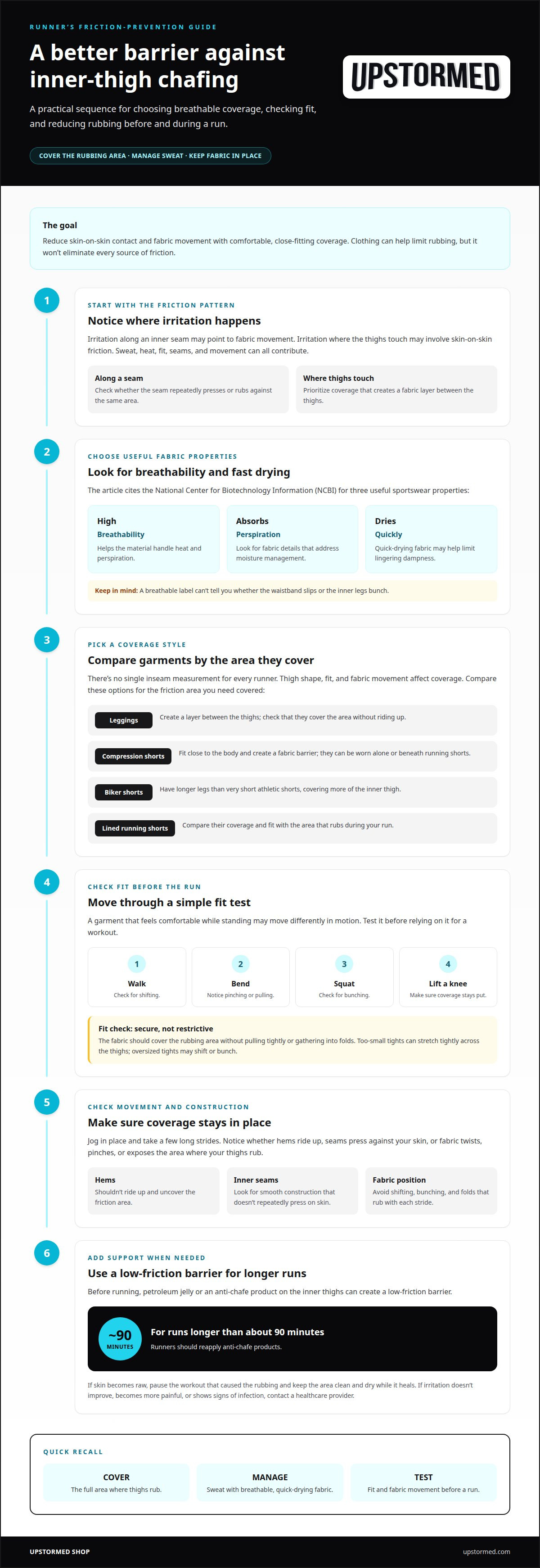
Think of workout tights as a moving barrier, not a shield against every kind of rubbing. Close-fitting fabric separates the inner thighs, replacing direct skin-on-skin contact with fabric against skin. That can help during running, walking, or cycling, when repeated strides bring the thighs together. But fabric can still rub if it bunches, stays damp, or presses against a sensitive spot.
The best fit feels secure without pulling. During a squat, the fabric should stretch without digging into your inner thigh. As you walk, it should stay smooth rather than sliding into folds. A waistband that stays put also helps prevent the legs from being tugged down, which can cause extra movement around the thighs.
Breathability matters because heat and sweat can make repeated friction harder on the skin. Quick-drying, moisture-wicking fabric helps manage perspiration during a run. Cotton can hold sweat against the body, so a damp cotton layer beneath tights may undermine the barrier. Consider what touches your skin, not just the outer layer.
Match coverage to the friction area. If irritation appears where your upper thighs meet, full-length leggings or longer shorts can cover that spot. If a hem rides up during a jog, it may expose the skin again. Do a quick movement test: walk, bend, and jog in place, then check whether the coverage stays steady.
Seams create another point of contact. A flat or offset seam can reduce rubbing from a raised edge against your inner thigh, while a gusset may allow more room through the crotch. Check how each seam sits when you lift a knee. Smooth construction helps, but even a low-profile seam can irritate if the garment twists as you move.
Pairing clothing with a friction barrier product can add another layer of support before a sweaty workout. Apply an anti-chafe balm or petroleum jelly to the inner thighs before running. For runs longer than about 90 minutes, reapply anti-chafe products. Clothing and skin care work together, but neither makes a poor fit comfortable.
Make the choice practical: select breathable fabric, enough coverage, and a close fit that stays smooth through your stride. Then test the tights in motion before relying on them for a longer run. For a fitted option to wear during training, explore workout leggings and look for the coverage and feel that suit your movement.
Upstormed Shop offers yoga fitness leggings, fitness tights, and gym, running, and sports clothing as an activewear option to consider after weighing fit, coverage, and fabric needs. Use the guidance above to decide what matters most for your workouts, then choose clothing that feels comfortable in motion. The listing identifies the apparel category, so assess how any garment suits your preferred coverage and activity rather than assuming a particular construction or chafing outcome.
A thoughtful choice supports your movement without asking you to ignore discomfort. If you’re ready to discuss your needs, contact Upstormed Shop.
Your next workout is a chance to notice what helps you move with confidence. Choosing breathable workout tights that prevent inner thigh chafing means finding an option suited to your body and activity, not chasing a perfect promise. Make comfort part of your preparation, and adjust when something doesn’t feel right.
If you’re ready to explore activewear, Upstormed Shop offers yoga fitness leggings and gym, running, and sports clothing. Choose with your own movement in mind, then step into your next run with confidence and self-trust.
Contact Upstormed Shop for help as you consider your next step. Keep moving at your pace, honor what feels right, and carry that strength into every stride.
Runners reduce chafing by combining steady clothing coverage with friction protection suited to the workout. Before heading out, consider the route, weather, and expected sweat: a warm, extended run may call for anti-chafe balm alongside tights. Carrying a small amount on longer outings can make reapplication practical. If irritation begins, stop or reduce the activity causing it, then keep the affected skin clean and dry.
Inner thigh chafing is irritation caused by repeated rubbing between the thighs or between skin and clothing. It may appear as soreness, redness, or raw skin where one surface moves against another. The location can offer a clue: irritation at a garment seam suggests fabric contact, while irritation where the thighs meet suggests skin-on-skin rubbing. Walking, running, and cycling can all involve repeated movement.
Leggings are useful when they create a smooth, steady barrier over the area that rubs. Look for comfortable coverage and construction that doesn’t press or scrape during movement. A gusset can provide room to move, while flat or offset seams may reduce contact from raised edges. Check the inner-thigh fabric for thinning or pilling, since worn material can feel rough and provide a less-smooth barrier.
Look for moisture-wicking, quick-drying fabric, breathable construction, and coverage that stays over the friction area. The National Center for Biotechnology Information (NCBI) identifies breathability, perspiration absorption, and fast drying as useful sportswear properties. These features work alongside fit: tights that shift or bunch can still rub, even if their fabric manages sweat. Check how the garment feels after walking, bending, and moving through your workout.
Choose performance fabric described as moisture-wicking and quick-drying rather than relying on a fabric name alone. What matters is how the material handles sweat during your activity. Cotton can absorb sweat and hold it against the skin, which may worsen rubbing. Check the garment’s fabric information and care instructions, then consider whether it feels comfortable during movement and dries promptly after a sweaty workout.
Workout tights should feel secure without pulling hard across the thighs or bunching into folds. Before a run, walk, bend, squat, and lift each knee. Notice whether the fabric stays smooth at the inner thighs and whether seams move against your skin. A tight garment may overstretch; a loose one may bunch. Choose a fit that remains comfortable through your full range of motion.
Compression tights can help by keeping fabric between the thighs and limiting direct skin contact. They’re useful when they cover the rubbing area and stay in place through repeated movement. Fit still matters: fabric that pulls, shifts, or bunches can create new friction. Try the tights with movements from your workout, such as jogging in place or taking a long stride, before relying on them for a run.
Choose tights with moisture-wicking, quick-drying fabric, smooth construction, and a fit that stays over the rubbing area without bunching. Compare listed prices with fabric details, construction, and care instructions; a higher price doesn’t necessarily mean better breathability or durability.

Article by
Jonathan Anthony Burkett
Jonathan Anthony Burkett was born in 1987. He is a bright writer inspired by many, as he continues to struggle in life. Devoted for achievement in his lifetime, he is willing to take any test. He told himself, that he would never give up no matter the trials and tribulations. He decided to write to help him move towards a bright future for himself; and because he knows that s what his Grandparents want for him.
Learning now that life is a challenge for many, with trials, tribulations, brutality, hatred, along with grief and manipulation. Jonathan is writing now to release his thoughts about life, after being motivated, inspired to prosper, encouraged to tolerate, uplifted, and empowered from his past.

A string bikini doesn’t need to dictate your whole outfit. For what to wear over a string bikini ...

ITU’s December radio seminar separates open plenaries from restricted workshops. Prepare a precis...

ESA’s November NEO newsletter explains how radar complements optical observations. A guide to rea...

 Account
 Cart