

15 Nov
2026
Jeans can count as smart casual, but distressed pairs don’t automatically qualify. Whether they work depends on your workplace’s dress code, and business-casual outfits generally call for denim without holes or heavy distressing. To learn how to style distressed denim for a casual office look, start with the setting and keep the rest of your outfit polished.
It makes sense to want comfort without feeling underdressed. The right cut, wash, and finishing pieces can make denim look more structured, but a blazer can’t override a strict dress code. When in doubt, choose cleaner jeans for a more formal office and save visible rips for a relaxed setting.
Here, you’ll find outfit ideas for different workplace expectations, including women’s business-casual pairings and polished blazer combinations. You’ll also learn when a crisp blouse, simple top, or subtle accessory can make your outfit feel intentional, and when distressed denim is better left out of the office.
Start with the dress code, then choose a silhouette that suits its level of formality. For a formal office, straight, slim, or tapered jeans create a cleaner line than baggy or dad jeans. Distressed details make denim look more casual, so even a tailored cut may not suit a workplace that expects traditional business attire. In a relaxed office, a casual shape can work if the rest of the outfit looks considered. The fit matters, but the workplace standard comes first.
A tailored fit doesn’t mean tight. Straight-leg jeans follow a clean line from hip to hem, while slim and tapered cuts narrow gradually. These shapes pair easily with a structured jacket, crisp shirt, or simple knit. Choose a rise and leg shape that let you sit, stand, and move comfortably through the workday. Pulling at the knees, a waistband that digs in, or fabric that restricts movement can undermine an otherwise polished outfit.
Denim quality affects comfort and appearance. Moderately thick, stretchable denim can support movement while holding its shape through sitting and standing. Look for fabric that feels substantial rather than flimsy, and check how it falls at the knee and hem. Jeans that stay smooth when you sit look more composed than a pair that bunches or twists. Stretch should help the denim move with you, not make it feel overly tight.
Color can also affect an outfit’s formality. For men’s office outfits, darker blue denim, such as classic indigo, offers a more polished starting point than pale or washed-out jeans. A dark straight or tapered pair sits neatly beneath a blazer, while a lighter wash reads as more relaxed. For women, a consistent, deep wash gives a blouse or knit a clean backdrop. Keep strong fading and visible distressing in proportion to the office’s expectations.
Build around the silhouette with one clear, office-ready layer. A polo can replace a T-shirt for comfort with a sharper finish. Knitwear works over a T-shirt or beneath a bomber jacket, adding a layer without formal tailoring. For example, pair tapered indigo jeans with a polo and neat knit, or wear straight-leg denim with a button-front shirt and blazer. These combinations show how shape, color, and layers work together.
Use a simple decision test before choosing jeans: does the cut suit the setting, does the denim stay comfortable in motion, and does the wash work with the outfit? If the office leans formal, favor straight, slim, or tapered jeans in a darker wash. If the setting is casual, you have more room to experiment with relaxed fits. Let the silhouette add structure, then finish the look with your shirt and layers.
Black denim gives a blazer outfit a darker, more composed foundation. Choose straight-leg jeans rather than skinny jeans for a balanced business-casual silhouette. Keep the wash consistent and the distressing restrained. A tailored blazer adds structure, but it can’t make visible holes appropriate for every workplace. If your office treats business casual as polished attire, choose jeans without holes or patches. The dress code sets the boundary; the blazer shapes the outfit within it.
For a crisp combination, wear a button-down shirt beneath a single-color blazer. Let the collar sit neatly above the lapels, then tuck the shirt in for a cleaner waistline. Straight-leg black jeans keep the outfit grounded without competing with the jacket. A blouse creates a softer, polished option; choose a simple shape that balances the blazer’s structure. For example, a dark blazer, light blouse, and black straight-leg jeans create contrast without adding another busy pattern.
Keep the outfit comfortable for the commute and workday. Jeans should let you sit, stand, and move without pulling at the waistband or knees. Try the full combination while seated: a blazer that bunches at the shoulders or jeans that pinch can distract you throughout the day. Check the hem with your chosen shoes, too. A clean break over loafers looks deliberate, while a hem that drags can look untidy after walking or commuting.
Classic loafers bring a polished finish to distressed black jeans. Pair them with a button-down and blazer for a clean, grounded look. Keep accessories simple: a subtle belt with a modest buckle can echo the outfit’s neat lines, while understated jewelry adds a finishing touch without competing with the denim. If the jeans already have visible distressing, let that be the outfit’s strongest detail. Avoid piling on loud accessories, graphic tops, or extra rips.
To dress up jeans without buying anything new, start with pieces already in your wardrobe. Add a blazer, press or smooth a button-down, tuck it neatly, and finish with loafers or another polished shoe. A blouse can replace the shirt for a softer look. The contrast between relaxed denim and sharper layers does the work; elaborate styling or new accessories aren’t necessary to make the outfit feel intentional.
For an office-appropriate look, choose black or another dark, even wash over pale or heavily faded denim. A uniform color looks streamlined beneath a blazer and pairs easily with a light shirt. Avoid jeans with conspicuous holes, patches, or extensive fraying when the setting calls for business-casual polish. In a relaxed office, subtle wear may feel more at home, but the workplace dress code still determines how much distressing fits.
For a women’s business-casual outfit, start with one solid denim color. A clean, even wash gives a blouse, knit, or jacket room to stand out. Choose jeans that feel comfortable when sitting and walking, rather than a pair that pulls at the waist or knees. A simple starting combination is straight-leg jeans, a tucked-in blouse, and a subtle belt. Each piece has a role: denim brings ease, while the top and belt sharpen the finish.
For a polished silhouette, balance the jeans’ shape with the top. Pair straight-leg denim with a softly structured blouse, then tuck or half-tuck the hem to define the waist. A blazer adds form, while a fitted knit keeps the outfit relaxed without looking unfinished. If the jeans have visible distressing, keep the shirt and jacket understated. Let one detail lead instead of making distressed denim, bold prints, and statement accessories compete.
Warm-weather dressing can look crisp without feeling heavy. Wear jeans with a polo or knit shirt, and choose a neat neckline that looks intentional beneath a jacket. A polo is a sharper alternative to a casual T-shirt; a lightweight knit adds texture without extra layers. Finish with simple sneakers for an easygoing office or heels for a dressier outfit. Match your shoes to the workplace’s expectations, not just the denim.
For cooler days, layer a crisp dress-shirt collar beneath a formal knit sweater. Let the collar show above the neckline, then pair the sweater with denim in a consistent wash. This combination adds structure around the face and keeps the outfit from feeling like weekend wear. A blazer can replace the sweater when the office calls for more polish. Keep the layers smooth at the shoulders and waist so the whole look stays neat as you move.
A denim midi skirt offers another route to office-ready denim. Pair it with a blouse, tuck the blouse neatly, and choose shoes that suit the setting. Sneakers make the outfit feel casual; heels give it a dressier finish. A modest belt can define the waist without drawing attention away from the blouse. Keep the skirt’s wash simple, especially if the top already has color, texture, or a noticeable pattern.
Distressing calls for careful judgment in a business-casual outfit. For a workplace that expects polished denim, choose jeans without holes, patches, or heavy fading. In a more relaxed setting, restrained wear can work with a button-front blouse, clean shoes, and a structured layer. Before leaving, check the outfit as a whole: the denim should fit comfortably, the top should look tidy, and no single detail should overwhelm the rest. That balance makes the look feel deliberate.
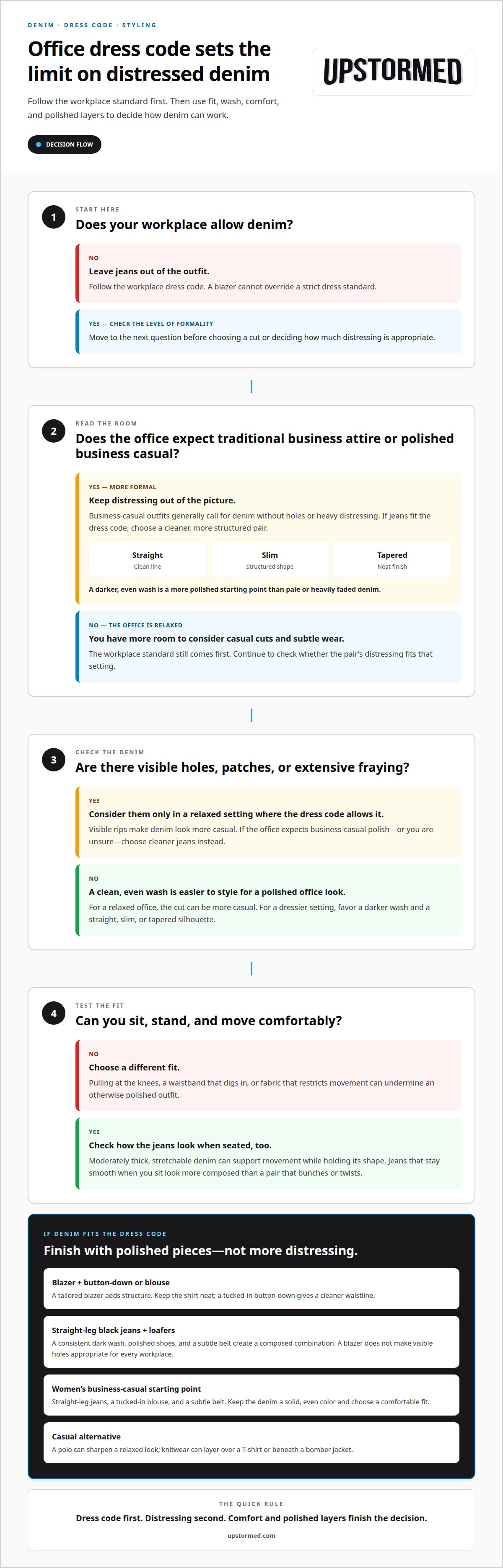
Jeans can fit business-casual attire in some workplaces, but the dress code decides. A creative studio may welcome dark denim with a blazer, while a client-facing office may expect trousers. Treat “casual” as a workplace-specific standard, not permission to wear any style of jeans. Before building an outfit, consider the setting, your day’s meetings, and how formal your colleagues’ clothing usually looks.
In a relaxed office, distressed jeans can work when the wear looks deliberate. Pair straight-leg jeans with a neat knit, simple blouse, or button-down shirt. Add clean shoes and a structured layer to balance the casual fabric. For example, black jeans with subtle distressing, a white shirt, and a dark blazer create a sharper outline than jeans paired with a graphic tee and casual hoodie.
A more traditional business-casual workplace calls for cleaner denim. Choose an even, dark wash and a straight or slim cut, then pair it with a crisp shirt or polished blouse. If the office expects formal business clothing, denim may not suit the day, even with a blazer. In that case, follow the stated dress code rather than relying on styling to change the garment’s level of formality.
Workdays can shift from desk time to meetings, presentations, or customer conversations. Dress for the most formal part of your schedule. For an internal planning day, a polo and dark jeans may feel appropriate in a relaxed setting. For a presentation with senior colleagues, a button-down and blazer create a more composed impression. If your day includes a formal event, choose clothing that aligns with its expectations.
New employees can take cues from the written dress code and their team’s outfits. Notice whether colleagues choose dark denim, polished shirts, and structured jackets, or avoid jeans altogether. These examples can help you understand the office’s everyday standard. Then adapt your outfit without copying every detail: a blouse, simple belt, and clean shoes can bring your own style to a more restrained denim look.
Dress codes may also vary by department or occasion. A casual Friday in one team doesn’t automatically set the standard for a client meeting elsewhere. Keep a more polished layer handy, such as a blazer over a button-down, when your schedule could become more formal. If visible rips fall outside workplace expectations, choose an undistressed pair instead. Confidence comes from knowing your outfit belongs in the room.
For a business-casual look, avoid jeans with holes, patches, or obvious distressing. These details make denim read as more casual, even when the cut is straight and the wash is dark. A clean pair with a blouse or button-down gives you a more office-ready foundation. If your workplace allows relaxed denim, choose subtle fading rather than exposed skin. The dress code matters more than the size of a rip or how polished the rest of your outfit looks.
Consider what a rip reveals when you sit, reach, or walk. A small knee opening may become more noticeable as the fabric shifts, while a tear at the thigh can expose more skin when you’re seated. Check the jeans in motion, not just in front of a mirror. If an opening widens or draws attention during ordinary movement, choose a less distressed pair for work. Comfort and coverage should hold up through your actual day.
Skin exposure also depends on the whole outfit. Distressed jeans with a cropped top, low neckline, or sheer layer can make the look feel more revealing than intended. For a balanced office outfit, pair jeans with a longer blouse, buttoned shirt, or structured blazer. Keep the waist covered when you sit, and choose a top that stays in place as you move. One relaxed element is easier to style than several competing ones.
Consider the day’s setting before deciding. A team’s casual workday may allow more relaxed clothing than a client presentation or formal meeting. For the meeting, switch ripped jeans for an undistressed pair, or cover mild wear with a blazer only if the dress code permits it. A jacket can add structure, but it doesn’t erase holes or change workplace expectations. If your office advises against distressed denim, follow that standard.
Use a simple outfit check before leaving: inspect the jeans for holes and patches, then sit and stand to see how much skin shows. Add a crisp shirt and clean shoes if the denim is otherwise appropriate. Skip frayed openings, torn patches, and tops that expose the midriff when business-casual dress is expected. If you want a bold weekend look, save more visible distressing for time outside the office. For work, choose a look that fits the room.
Upstormed Shop offers fashion and apparel options to explore as you build a wardrobe around your workday style. Its women’s collection includes jeans, tops, T-shirts, dresses, and activewear, so you can consider denim alongside other everyday pieces. Use the dress-code guidance above to decide what suits your workplace, then choose clothing that feels true to you. A polished outfit starts with the setting, but it should still feel like yours.
For office wear, focus on how each piece fits into your existing wardrobe. A pair of jeans can be a casual option for relaxed settings, while a blouse or structured layer can help create a more composed outfit where denim is welcome. Explore the apparel that fits your personal style, and contact Upstormed Shop with your questions.
Your office outfits can reflect your personality without losing sight of the setting. Use your workplace’s expectations as a starting point, then choose pieces that feel comfortable and authentic. Learning how to style distressed denim for a casual office look also gives you a chance to decide which parts of your style belong at work and which are better saved for another occasion.
As you build your wardrobe, explore pieces for different parts of your life, from Ripped Slimming Jeans For Women to yoga fitness leggings and a beach dress. Upstormed Shop offers these apparel options for a range of personal styles. Choose what feels right for you, and let confidence lead.
Have a question about the apparel? Contact Upstormed Shop and take your next step with confidence.
Jeans can fit a smart-casual outfit when the workplace allows denim and the rest of the look feels polished. For example, clean dark jeans with a neat shirt and well-kept shoes can look more refined than faded jeans with a casual graphic tee. Smart casual varies by employer, so consider the day’s setting, too. A team lunch may call for a different level of polish than an external presentation.
If you’re deciding how to style distressed denim for a casual office look, choose jeans with restrained wear and no large openings that expose skin. A small, tidy fray at the hem may look more understated than torn knees or thigh holes. The overall finish matters: avoid loose threads that catch or dangling fabric that looks unfinished. For a business-casual meeting, undistressed denim is the safer choice.
Keep the blazer and layers beneath it simple, so the denim doesn’t compete with several statement details. For example, pair black jeans with subtle wear, a solid-color shell, and a blazer with clean lapels. Make sure the jacket sits smoothly both buttoned and open. A tidy shirt cuff and a belt that matches the outfit’s overall tone can help the pieces feel connected.
A button-front shirt, plain blouse, polo, or fine knit can balance distressed denim without making the outfit feel overworked. Choose a neckline and hem that stay neat through a full workday. For a simple example, wear a solid blouse with black jeans and add a light cardigan for a relaxed office. Skip slogan tops and busy graphics if the jeans already draw attention.
Loafers, understated heels, and clean, simple sneakers can work with denim when they suit the workplace’s dress code. Keep shoes in good condition and make sure the hem doesn’t drag over them. Loafers bring a more traditional finish, while simple sneakers suit a relaxed setting. For a meeting-heavy day, choose the pair that looks most polished with your shirt and jacket.
How to style distressed denim for a casual office look depends first on workplace expectations and the day’s schedule. For a relaxed office, combine restrained distressing with a neat top; for business casual, choose cleaner denim and a polished shirt or blouse. For formal business settings, wear trousers instead. If your day includes a client meeting, build your outfit around that more formal commitment.
Article by
Jonathan Anthony Burkett
Jonathan Anthony Burkett was born in 1987. He is a bright writer inspired by many, as he continues to struggle in life. Devoted for achievement in his lifetime, he is willing to take any test. He told himself, that he would never give up no matter the trials and tribulations. He decided to write to help him move towards a bright future for himself; and because he knows that s what his Grandparents want for him.
Learning now that life is a challenge for many, with trials, tribulations, brutality, hatred, along with grief and manipulation. Jonathan is writing now to release his thoughts about life, after being motivated, inspired to prosper, encouraged to tolerate, uplifted, and empowered from his past.

For November 15, connect recycling messages with the actual program that receives the material.

UNESCO’s November 12 conference agenda offers a starting point for examining the practical handof...

UN Tourism’s current barometer separates measured arrivals from expert expectations; travel decis...

 Account
 Cart