

10 Nov
2026
Your outfit can say what words leave unsaid. Women's clothing for self expression can reflect your values, interests, mood, and the person you’re becoming, while shaping how you feel in what you wear.
You already know clothes can change how you carry yourself. A familiar favorite can feel grounding; a bold color or unexpected pairing can help you show a side of yourself you’re ready to own. Personal style isn’t about following every trend or fitting someone else’s ideal. It’s about choosing what feels true to you.
Explore how clothing communicates identity, influences self-perception, and can support confidence without defining your worth. You’ll also see how to make room for trends while keeping your own taste in the lead. From everyday staples to expressive details, each choice can help tell your story. Wear what feels like you, and let your style grow with you.
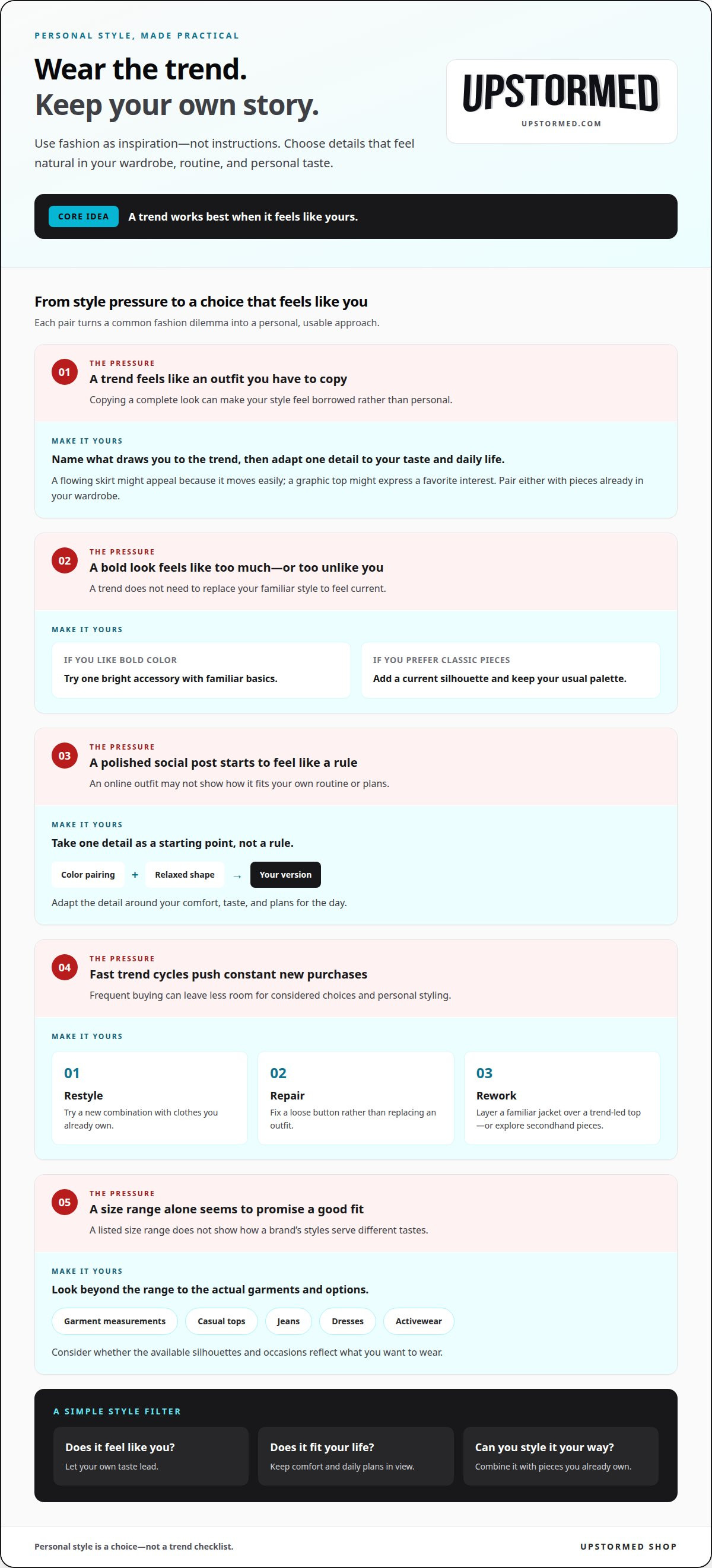
Fashion can make individuality visible, but a trend works best when it feels like yours. Use current looks as inspiration, not instructions.
Choosing trends that fit your personal taste means adapting a popular look to suit your preferences and daily life. Individuality comes from deliberate choices, not copying a complete outfit. If bold colors feel right, try one bright accessory with familiar basics. If you prefer classic pieces, add a current silhouette while keeping your usual palette.
Try a simple test before adding a trend: name what draws you to it, then find a way to wear it that feels natural. A flowing skirt might appeal because it moves easily, while a graphic top might express a favorite interest. Combine either with pieces already in your wardrobe. The result can feel current without making your style feel borrowed.
Social media can offer ideas, but a polished post doesn’t show how an outfit fits your routine. Notice a detail you like, such as a color pairing or relaxed shape, and adapt it. A saved outfit can be a starting point, not a rule. Your comfort, taste, and plans for the day still matter.
In the United States, look at online retailers’ size ranges, garment measurements, and style categories when exploring inclusive clothing. A size range alone doesn’t show how a brand’s styles serve different tastes, so browse examples such as casual tops, jeans, dresses, and activewear. Consider whether the available options reflect the variety of silhouettes and occasions you want to wear.
Fast fashion’s rapid trend cycles can encourage frequent buying and leave less room for considered choices. A practical alternative is to restyle what you own, repair a loose button, or explore secondhand pieces. For example, wear a familiar jacket over a trend-led top instead of replacing a whole outfit. These choices support personal style without relying on constant new purchases.
Clothing can tell a personal story through garments and styling details that express experiences, values, and changing interests. Your outfit can say something about you before you speak. A meaningful graphic tee, a traditional textile, or a favorite color can carry a memory or connection. Choose details that feel honest, rather than dressing for someone else’s expectations.
Fashion has also carried messages through shared style. The 1920s flapper movement included women choosing looser silhouettes instead of restrictive corsets, while 1970s punk used ripped garments and leather jackets to reject conventional fashion. Those examples show how clothing can express more than a passing trend. Your own story can be quieter, brighter, or still unfolding.
A wardrobe can reflect what matters to you, from daily routines to cultural roots. Start with pieces that feel meaningful and useful.
Clothing reflects identity when its colors, shapes, and symbols convey something personal. That matters because the right pieces can help you feel represented in everyday settings. A classic shirt might suit a preference for simple lines, while a printed top can signal a love of vivid patterns. Let your wardrobe hold several sides of who you are.
To identify your preferences, look at the clothes you reach for repeatedly. Notice the fit, fabric, color, and details they share. Then consider what you need for work, rest, movement, and social occasions. Someone who spends the day on the move may favor comfortable layers, while someone drawn to polished outfits may choose structured pieces. These observations reveal practical style patterns without forcing you into one label.
Cultural identity can also shape clothing choices. Traditional garments, textiles, and symbols may carry family history, community belonging, or religious meaning. A woven shawl worn at a gathering, for example, can celebrate heritage and connect generations. Cultural norms also influence what feels appropriate in different settings. Understanding those expectations can help you decide how to express pride, adapt a garment, or wear it in a way that feels respectful and personal.
Affordable experimentation means testing new combinations with clothes you already own before buying anything. Personal style can grow through creative choices, not constant additions. Try tucking a familiar shirt, layering it under a dress, or rolling its sleeves differently. Small adjustments can make a well-known piece feel fresh.
Make a short outfit plan using one item in different ways. For example, style the same skirt with a plain top for errands and a textured layer for dinner. Borrowing a scarf from a friend or swapping accessories can introduce a new color without rebuilding your wardrobe. Keep the combinations that feel comfortable and distinctly yours.
A useful wardrobe can include classic pieces alongside items that express specific interests. A neutral jacket may work across several settings, while a graphic tee can reflect a favorite cause or creative passion. Before adding a garment, think about which existing pieces could work with it. This simple pairing test helps each choice serve your identity and everyday life.
Clothing can influence how you feel and act, but it doesn’t measure your worth. A deliberate outfit can help you feel more present, prepared, or fully yourself.
Enclothed cognition describes how clothing’s symbolic meaning and physical feel can influence thought and behavior. A structured jacket may remind you of competence before a presentation, while soft, familiar clothes may feel comforting on a demanding day. The effect depends on what those elements mean to you. Notice your own response rather than treating any garment as a guaranteed confidence boost.
Context matters. A tailored suit may signal professionalism and authority in a formal meeting, while comfortable leggings may help you focus on movement during a workout. Clothes don’t create your skills, but they can help set a mood that supports how you use them. Choose for the moment you’re entering, and consider fit and comfort alongside appearance.
Wearing clothes that align with your identity can support confidence and self-esteem because your outward presentation feels like your own. That might mean choosing a vivid color, a relaxed silhouette, or a detail that reflects an interest. Clothing can help you express autonomy and individuality. Let your choices serve you, rather than turning them into a test you must pass.
Gender expression is personal, and clothing can help people communicate how they want to present themselves. Non-binary and genderqueer people, for example, may choose styles that help them feel more at ease in their bodies and clothes. A diverse range of silhouettes and combinations can make room for different forms of expression. Your comfort and sense of self are valid starting points.
Celebrity endorsements, social media campaigns, and fashion shows can shape consumer confidence by influencing which looks appear desirable or wearable. They may introduce new ideas, but polished images can also promote unrealistic beauty ideals and contribute to insecurity. If an image makes you feel that your body must change before you can dress with confidence, pause. Separate the styling idea from the standard being sold.
Try a grounded confidence check: before an important event, choose an outfit that suits the setting, feels comfortable, and reflects one quality you want to bring forward. For a presentation, that might be a structured layer; for a difficult day, a familiar sweater. Ask yourself whether you can move, focus, and participate comfortably. Confidence grows from your own agency, not from a label or trend.
Clothing choices can influence how you perceive yourself, not just how others see you. A crisp shirt may help you feel prepared for a meeting, while a familiar hoodie can feel reassuring on a quiet day. These responses are personal, but they show why getting dressed can help shape how you approach an ordinary moment.
Self-perception theory suggests people infer their attitudes and emotions partly from their own behavior, including how they dress. For example, choosing a bright outfit for a social gathering might reinforce a sense of openness or readiness to connect. Clothes don’t create your personality, but they can become a visible cue you use to understand how you feel.
Research by Hajo Adam and Adam D. Galinsky offers a specific example. In an experiment, participants showed higher sustained attention when wearing a lab coat resembling a doctor’s coat than when wearing one resembling a painter’s coat. The researchers connected the result to the meaning people attached to the garment. A uniform, blazer, or apron can carry associations that influence how its wearer approaches a task.
Notice the link between an outfit and your experience rather than judging the outfit alone. Before a presentation, for instance, consider whether structured clothing helps you feel focused. Afterward, reflect on whether comfort, fit, or the setting affected that feeling. This can help separate your own response from assumptions about what a “confident” person should wear.
Clothing can also influence body image and self-esteem. Jeans that feel comfortable may let you focus on your plans instead of adjusting your outfit. By contrast, fashion images built around narrow or unrealistic beauty standards can encourage comparisons and insecurity. Your body doesn’t need to match an advertisement’s ideal for your clothing choices to feel expressive or worthwhile.
Social media and fashion advertising can shape how people perceive clothes and themselves. A carefully edited campaign may present one silhouette as the only way to wear a trend, while everyday wardrobes show more varied ways to style it. Treat images as visual references, not measures of your value. Keep the colors, layers, or ideas you like, and leave the pressure behind.
Brand imagery can create emotional connections, too. A logo or recurring message may come to represent belonging, ambition, or a personal memory. That connection can feel meaningful, but it doesn’t have to define your identity. Ask what a garment means to you beyond its label. Your own memories, comfort, and choices matter more than what a brand suggests you should feel.
Clothing is powerful when it supports self-understanding, not when it sets the terms for self-worth. Use a simple check: does this outfit suit the activity, feel comfortable, and reflect something you value? If it meets those needs, wear it with intention. If not, choose another. You decide what meaning your clothes carry.
Minimalist, romantic, sporty, and eclectic styles can each express personality in different ways. The right choice is the one that reflects your tastes and values, whether that means clean lines, soft florals, practical layers, or a mix that feels entirely your own.
An outfit communicates through its colors, shapes, textures, and symbols. A dark monochrome look can create a sleek aesthetic, while a bright patterned shirt can bring playful energy. These visual choices offer nonverbal cues, but they don’t define you completely. They give you a way to show what feels important in a particular moment.
Personal style doesn’t need a single label. Pair a tailored blazer with relaxed jeans, or wear a graphic tee beneath a polished jacket. Mixing formal and casual elements can reflect different parts of your life at once. The combination becomes meaningful through your choices, not through whether it follows a fixed fashion category.
Accessories offer a simple way to make an outfit more individual. Add a patterned scarf to a plain shirt, choose earrings in a color you love, or carry a bag connected to a meaningful memory. One distinctive detail can shift the whole look. Choose pieces that feel personal, then let them complement rather than compete with your clothes.
Small details can also convey interests and beliefs. A nature-inspired print may reflect a love of the outdoors, while a handcrafted-looking accessory can suggest appreciation for craft. These details invite conversation without requiring explanation. Wear them because they mean something to you, not because you expect everyone to read them the same way.
For a practical starting point, build an outfit around one element you want to express. Choose a color that feels bold, a relaxed silhouette, or a texture that adds contrast. Then keep the rest simple, such as pairing a vivid top with dark trousers. This gives the focal piece room to speak.
Clothing can become wearable art when you experiment with proportion and contrast. Try a flowing skirt with a structured jacket, or combine a vintage-inspired piece with modern basics. Each pairing changes the overall impression. Keep combinations that feel comfortable and honest, and let your aesthetic evolve as your interests and experiences change.
Clothing can reflect tastes, values, beliefs, and aspirations, communicating how someone wants to be perceived. Personal style can also reflect moods and experiences.
Upstormed Shop offers activewear for days when movement is part of your personal style. Yoga Fitness Leggings Women Pants Fitness Slim Tights Gym Running Sports Clothing brings an expressive, sport-inspired look to your wardrobe. Choose pieces that suit your activities and feel like you.
For other moods and settings, explore ripped jeans, a beach dress, or solid-color bikini swim trunks. Each option offers another way to shape your look, from relaxed everyday outfits to beachwear. Let your clothes reflect the energy you want to carry, not someone else’s expectations.
Contact Upstormed Shop to explore clothing that fits your personal style.
Your style doesn’t need to stay fixed. Let it shift as your priorities, experiences, and sense of self grow. The best women's clothing for self expression gives you room to choose what feels right today, without asking you to dress like someone you’ve outgrown.
Make your next choice with intention. Reach for a piece that supports the day ahead, or try a look that brings a fresh spark to your routine. At Upstormed Shop, options include ripped jeans, a beach dress, and yoga fitness leggings. Start with the piece that speaks to your plans and personality, then make it your own.
Contact Upstormed Shop today to explore clothing for your personal style. Keep choosing what feels honest, keep making room for change, and carry your story forward with confidence.
Clothing expresses personality through choices like color, shape, graphics, and how pieces are combined. A nature-print top, relaxed jacket, or bold accessory can signal interests or a mood without needing explanation. Treat each outfit as one possible expression, not a complete definition of who you are. Your style can change with the setting, your feelings, and what you want to communicate.
Build a wardrobe by noticing which pieces help you feel comfortable and ready for the day. Record a few outfits you enjoyed wearing, then look for shared details, such as soft fabrics, strong colors, or clean shapes. Use those observations to guide future choices. Before buying something new, think of a specific outfit you could make with it, rather than choosing it only because it looks striking on its own.
Culture, gender identity, and body image can shape what feels meaningful, comfortable, or affirming to wear. Someone may choose a garment connected to family heritage for a celebration, while another person may favor silhouettes that align with their gender expression. Body image can also affect comfort with fit or exposure. Ask whether an outfit supports your own sense of ease, rather than measuring yourself against an idealized image.
Follow the workplace’s stated dress expectations, then personalize details that fit those boundaries. A neutral office outfit might include a distinctive color, a patterned scarf, or jewelry with personal meaning. If the workplace requires a uniform or specific pieces, choices such as how you layer or coordinate permitted items can still feel individual. Honor the setting without erasing your preferences.
There isn’t one look that represents everyone in the United States. Current fashion offers a mix of trend-led pieces and personal combinations, while social media helps people showcase styles and find inspiration beyond traditional fashion narratives. Use a trend as a detail to adapt, such as a color or silhouette, rather than a full outfit formula. The most relevant direction is the one that fits your taste and everyday life.

Article by
Jonathan Anthony Burkett
Jonathan Anthony Burkett was born in 1987. He is a bright writer inspired by many, as he continues to struggle in life. Devoted for achievement in his lifetime, he is willing to take any test. He told himself, that he would never give up no matter the trials and tribulations. He decided to write to help him move towards a bright future for himself; and because he knows that s what his Grandparents want for him.
Learning now that life is a challenge for many, with trials, tribulations, brutality, hatred, along with grief and manipulation. Jonathan is writing now to release his thoughts about life, after being motivated, inspired to prosper, encouraged to tolerate, uplifted, and empowered from his past.

A planning reflection for Te Papa’s forthcoming playable exhibition, opening December 12, 2026, i...

The 2026 Golden Horse nominations offer a starting point for paying closer attention to sound cre...

An existing museum resource offers a way to separate surviving evidence, reconstruction and unans...

 Account
 Cart