

03 Nov
2026
Last Updated: November 4, 2026
Quick Summary
To elevate daily wardrobe choices, start with a clear sense of your personal style, then audit your closet before shopping. Sort pieces into keep, fix, donate and store piles, and fill only the gaps that create at least three outfits. Buying this way keeps purchases versatile and prevents duplicate items.
Elevating your daily wardrobe for online boutiques starts with knowing who you are when you get dressed, because a clear sense of personal style is what makes any elevate daily wardrobe effort work. Clothing can express identity, so the first step is clarity about your own style, not a product list. Our guide to clothing for self-expression helps you pin down that style before you shop.
Most shoppers scroll for hours and still leave with a cart full of pieces that do not match. The fix is simple: decide what you want your clothes to say before you open a single tab.
Watch out: buying a trend that clashes with your three words usually ends in a return or a drawer of unworn items.
You may already own most of what you need. Our guide to building a versatile wardrobe on a budget walks through stretching what you have. Small changes in fit, layering and accessories often do more than a new purchase.
Try these first:
Re-wearing familiar pieces in new combinations costs nothing, and it is the quickest way to see which items deserve an upgrade as you work to elevate daily wardrobe choices over time.
A closet audit is the step most shoppers skip, and it is the one that prevents duplicate buys. Set aside 60 to 90 minutes, empty one category at a time (tops, then bottoms, then layers, then shoes), and handle each piece once. Sorting by category rather than by the whole closet keeps the task finite and makes duplicates obvious.
Use four piles instead of three:
Count what survives. A common pattern is owning several near-identical basics, three black tops, four gray tees, and almost nothing that bridges them into outfits. Write the counts down; the numbers are what turn a vague feeling of "I have nothing to wear" into a shopping list.
RISEN Full Size High Rise Ankle Flare Jeans →
A gap is a missing piece that unlocks several new outfits, not one. Before you add anything to a cart, run three tests:
Gaps that usually pass all three tests:
Watch out: a sale price is not a reason to fill a gap you did not identify. If the item fails the three-outfit test, it will likely end up back in the donate pile at the next audit.
Translate the gaps into a written list before you open any boutique tab: category, color, fabric preference, and a target number of outfits it must create. A list of three to five items is enough for one season. Bring it to every product page and check each candidate against it, this is the difference between shopping intentionally and scrolling until something looks appealing.
The 3-3-3 rule is a simple planning method. Choose three base pieces, three accent pieces and three shoes or accessories, then build outfits only from that set.
Limiting your options forces better combinations. You stop buying single-use items and start buying pieces that work together.
Independent online boutiques rarely share a single size standard, so the size label on a product page tells you less than the measurements do. Treat every listing as its own spec sheet and compare numbers, not letters.
Take your own measurements once and keep them handy: bust, waist, hip, inseam, and the shoulder-to-shoulder width of a jacket that fits you well. Also measure a favorite top and a favorite pair of pants laid flat, flat measurements are often what boutiques list, and comparing like with like removes guesswork.
When a product page lists measurements by size, match your body or your favorite garment to the closest column rather than defaulting to your usual size. For example, the RISEN Full Size High Rise Ankle Flare Jeans are listed at $71.58 with a 27 inch inseam across sizes, so check the inseam against a pair you already own before ordering.
Watch out: a size chart that lists only S/M/L with no measurements is a signal to ask the boutique for garment measurements before you buy, especially on final-sale items.
Fabric content predicts how a piece will drape, stretch, pill, and hold up in the wash. A few practical reads:
Cotton with a small amount of spandex (the RISEN jeans are 98% cotton and 2% spandex) gives slight stretch. Machine wash cold and tumble dry low.
Care instructions belong in your buying decision, not after it.
Cost per wear is the price divided by the number of times you realistically expect to wear the item. A $29.18 ribbed half-button top worn twice a week for a season lands near a dollar per wear; a $120 occasion piece worn twice costs $60 each time. Use the three-outfit test from your audit to estimate wear frequency honestly, then compare candidates on cost per wear rather than sticker price alone.
Before any order, read the size and fit notes on the product page, and look for model height and the size worn, it is a useful check on how a piece falls on a real body. Measurements, fabric content and care instructions are the details worth comparing before you buy. If you want help working through fit and sizing questions across several boutiques at once, Shop For Better is a useful place to start.
The sizing and fabric details that matter most when comparing boutique listings are summarised below.
| Item | Value | Note |
|---|---|---|
| RISEN Ankle Flare Jeans | $71.58 | 27 inch inseam, check against a favorite pair |
| RISEN Jeans fabric | 98% cotton, 2% spandex | Machine wash cold, tumble dry low |
| Ribbed half-button top | $29.18 | Roughly $1 per wear if worn twice weekly for a season |
| Occasion piece example | $120 | About $60 per wear if worn twice |
Build outfits from a few reliable pieces. Three combinations to start with:
The ribbed top is listed at $29.18 and works with jeans or a skirt. The denim jacket is $56.60 and can be worn open or closed. The linen striped blazer is $38.14.
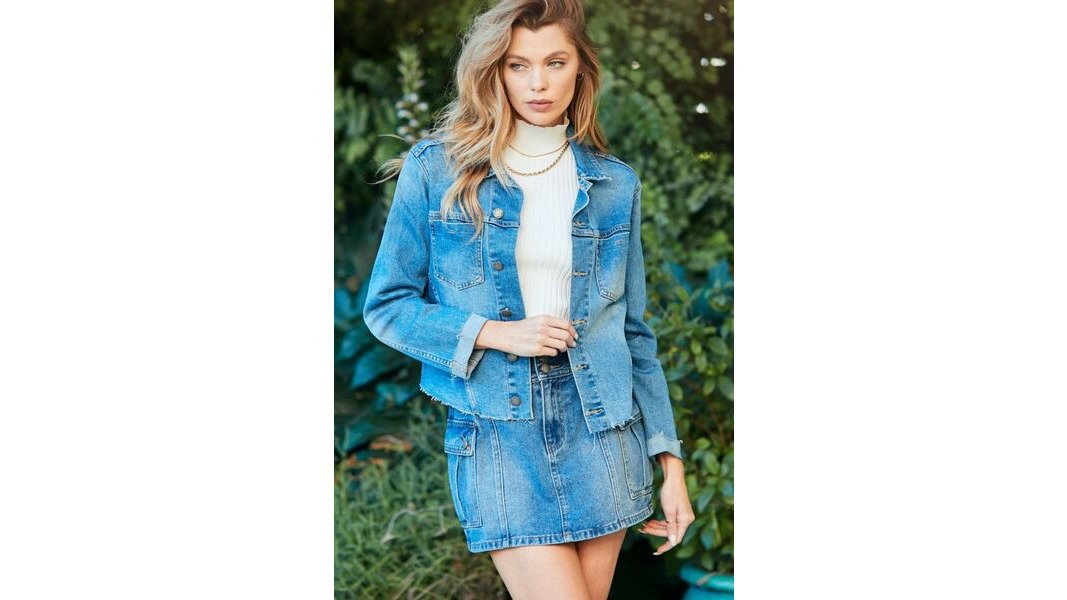
Pick one gap from your audit, apply the 3-3-3 rule, and buy one piece that pairs with at least three things you already own. Upstormed offers free shipping on orders over $120, so you can group a few planned pieces into one order.

Start small, wear the new piece for a week, and notice which outfits you reach for. That tells you what to add next.
The 3-3-3 rule is a planning shortcut for building outfits from fewer pieces. Choose three neutral bottoms, three tops and three layering or statement pieces, then check that each top works with each bottom. Nine items can produce many combinations, which helps you see gaps before buying. Apply it to your closet first, then use it as a filter when browsing an online boutique so each purchase must pair with pieces you already own.
Start by saving outfit photos you return to and noting what they share: silhouette, color, fabric and level of polish. Then look at what you wear most often from your current closet. Patterns usually appear within a few weeks. Pick two or three words that describe the look you want, such as relaxed, sharp or romantic, and use them to screen boutique listings before you add anything to your cart.
Change how you combine what you own. Tuck a knit into jeans, add a structured blazer over a basic tee, or swap flat shoes for a heel or loafer. Accessories such as a belt, a simple necklace or a scarf also shift the mood of an outfit quickly. Repairing hems, steaming wrinkled pieces and removing pilling will make existing clothes look more deliberate and well kept.
Check the fabric content and care instructions before reading the description, because they predict how a piece will wear over time. Compare the listed measurements, such as bust, waist and hip, against your own measurements rather than relying on your usual size. Ask whether the piece pairs with at least three items you already own. If it does not, skip it, even if it is discounted.

Women's swimsuit reviews with real guidance on fit, support, coverage, fabric, and confidence, so...

Choose habit tracking apps that support mental health. Compare free, iPhone and Android options, ...

Flare jeans vs skinny jeans: compare fit, styling, comfort, and proportions to choose the denim s...

 Account
 Cart
