

02 Nov
2026
Last Updated: November 2, 2026
Quick Summary
The best habit tracking apps for mental health track mood alongside behavior, let you pause without penalty, and use calm interfaces with gentle notifications. Prioritize progress monitoring over fragile streaks, and start with one habit plus one daily mood check-in for two weeks before adding more.
The best habit tracking apps for mental health make the connection between daily behavior and emotional state visible without turning your life into a performance review.
Here is the tension most guides ignore. A habit tracker built for productivity rewards output; one built for mental well-being has to reward awareness, and those goals pull in opposite directions. An app that shames you for missing a day damages the very thing you are trying to improve.
Judge any app against five questions before you download it:
A common mistake is choosing an app by its App Store rating alone. Ratings measure polish, not fit. A five-star productivity tracker can be a terrible mental health companion.
Streak tracking is the feature most people assume they need and the one most likely to backfire. A streak is a chain, and chains create anxiety. The healthier design is progress monitoring that shows frequency over time rather than a fragile consecutive count.
What to prioritize instead:
If you are layering stress-management techniques into your routine, natural ways to manage stress without medication pair well with what these apps help you observe.
Free tiers are a sensible place to start for most people. Paid upgrades usually add analytics, cloud sync, or coaching, none of which matter until the habit itself has stuck.
What to expect from a strong free tier:
What free tiers usually withhold: cross-platform synchronization, long-term data export, and advanced wellness metrics. That is a fair trade for testing whether an app fits your daily routines.
Watch out: some free health apps monetize by selling anonymized behavioral data. Read the privacy summary before you log anything sensitive, and check FTC guidance on health app data privacy for what companies are required to disclose.
iPhone users have an advantage built into the device: the Health app and its ecosystem. Apps that write to Apple Health can combine sleep, activity, and mindfulness data in one place, turning scattered self-care efforts into a single view. But most roundups stop at "it syncs with Health" and never ask whether the app's design reduces pressure or adds it.
When evaluating an iPhone habit tracker, check four things:
An app that requires opening it fully to log a mood will lose to one that does not.
Where iPhone apps fall short: cross-platform synchronization. If you also use an Android tablet or a work laptop, confirm your data follows you before committing.
Watch out: an app that pushes a daily "perfect day" badge is optimizing for engagement, not your well-being.
Here is what each iPhone app the article names is best suited to, and where it falls short.
| App | Cost | Best for | Limitation |
|---|---|---|---|
| Apple Health app | Free, built in | State of Mind log and mental health questionnaires | Tracks mood and assessments, not custom habits |
| Bearable | Free tier; premium subscription | Correlating mood, symptoms, sleep, energy, medication | , |
| Daylio | Free tier; premium subscription | Two-tap mood entry with activity tags | Gamified streak language can feel like pressure |
| Streaks | One-time purchase | Habit-first tracking with Health integration and widget | Not mood-first; pair with a mood log |
Home-screen widgets, customizable notification channels, and deeper automation let you build a tracking system that fits your behavioral patterns instead of the other way around.
Priorities for Android users:
Test any free tier for a full week before paying. A tracker that drains your battery or nags you at the wrong time will not survive month one.
Yes, with a caveat: habit trackers help ADHD brains most when they reduce friction and least when they add ceremony. The question is whether the specific design supports executive function rather than demanding more of it.
ADHD-friendly tracking tends to share these traits:
The feature that sinks most ADHD users is the long setup. Reducing friction during the initial onboarding process remains a critical factor when evaluating productivity apps for ADHD.
Executive function covers the mental skills that govern planning, starting tasks, and regulating attention. A tracker supports these skills when it externalizes memory, and undermines them when it adds decisions.
Look for trigger identification features: the ability to note what preceded a missed habit. If motivation is the sticking point, how to maintain motivation when feeling stuck offers practical ways to restart without self-criticism.
Mental health data is sensitive and deserves careful handling. Most roundups mention privacy in a single sentence; this section treats it as a selection criterion, alongside an anti-burnout philosophy.
Before you commit, confirm four things:
FTC guidance on health app data privacy is the place to check what companies are required to disclose.
Privacy-first options tend to share a few traits: offline-first architecture, no account required to start, on-device processing, and an explicit statement that health entries are never used for advertising. If an app cannot tell you in plain language where your data goes, assume the least favorable answer.
The anti-burnout approach means the tracker assumes you are a person with limited energy, not a machine optimizing output.
Signs an app follows the anti-burnout approach:
Compare that with gamification done badly: points, levels, and competitive rankings that turn consistency into another performance to fail at.
A concrete way to test an app before committing: deliberately miss a day in week one and observe how it responds.
One underused reason to care about export is clinical utility. A two-week log of mood, sleep, and habit adherence gives a therapist concrete pattern data a single session cannot surface. Before your next appointment, export a date range, note the two or three patterns you noticed, and bring the file. Confirm with your provider how they prefer to receive files, since not every practice accepts app exports.
Start with one habit and one mood check-in per day, tracked for two weeks before adding anything else. That is the entire method. Most routines collapse because people begin with a dashboard instead of a single behavior.
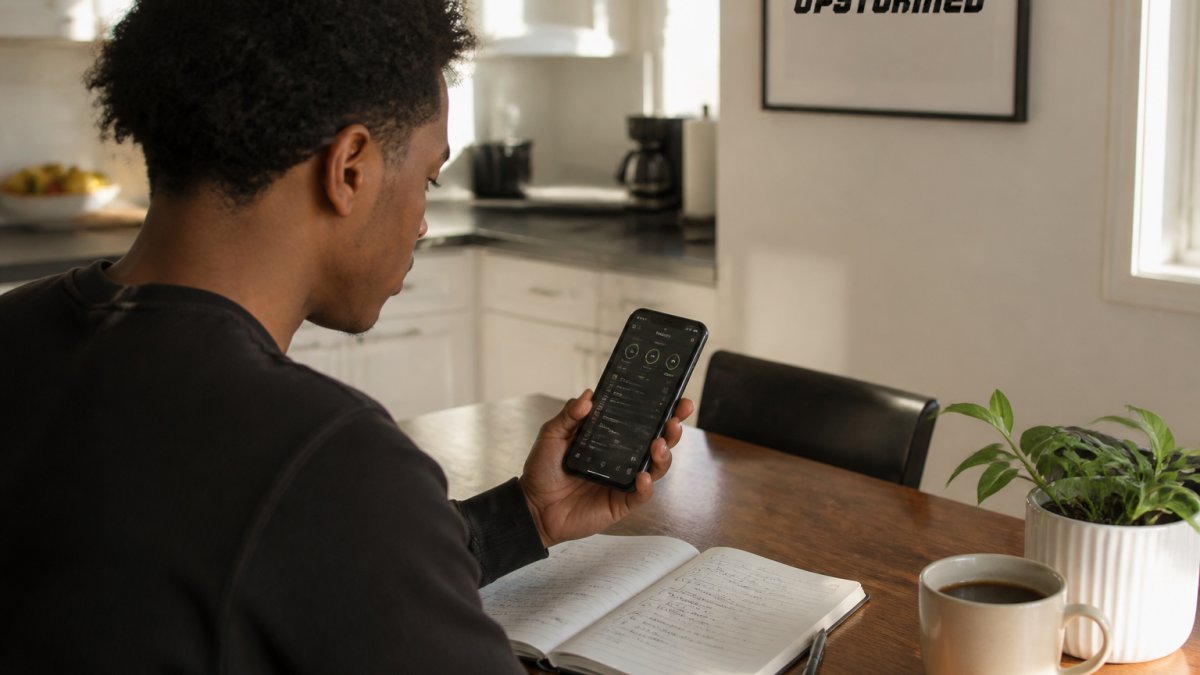
A routine that holds together usually looks like this:
If you want a written method to pair with the app, how to start a resilience journal walks through the practice step by step. For a wider structure around your goals, design a personalized self-improvement system shows how tracking fits into a larger plan.
The apps are only the container.
That is where we come in. Upstormed offers a curated selection of apparel, books, and music designed to inspire personal growth and resilience. You can browse the full range at Shop For Better.
Start with one habit today. Add one source of inspiration this week. How to build resilience through daily habits is a good next read if you want the longer view.
The best free option depends on whether you want mood logging, simple habit check-ins, or both. Look for apps that offer core features at no cost, such as daily reminders, basic mood tracking, and a clean interface. Free tiers often limit history or advanced data visualization, so check what you lose before committing. Start with one free app, use it for two weeks, and upgrade only if you hit a real limitation rather than a paywall prompt.
The key is choosing an app with low-friction check-ins, gentle reminders, and no punishing streak resets. Avoid apps that make you feel guilty for missed days. Short, flexible habits and customizable push notifications tend to work better than rigid daily streaks for neurodivergent users.
No. Habit tracking apps are self-management tools, not clinical treatment. They can support therapy by helping you log mood patterns, sleep hygiene, medication reminders, and trigger identification between sessions, and some people share that data with a therapist. If anxiety, low mood, or other symptoms interfere with daily life, talk to a licensed professional. Use tracking as a complement to care, not a substitute for it.
Privacy varies widely. Before entering sensitive mood or symptom data, read the app's privacy policy and check whether it sells or shares data with third parties. Prefer apps with offline-only modes, local storage, or clear opt-outs from analytics. For clinical-grade privacy, ask whether the app is HIPAA-compliant. If privacy is your top priority, choose a privacy-first or offline-only option and skip apps that require an account to use basic features.
Building a mental health routine takes more than an app. It takes daily reinforcement from what you read, wear, and listen to. Upstormed curates apparel, books, and music designed to inspire personal growth and resilience, with free shipping on orders over $120. Get started with Upstormed and build a routine that uplifts you every single day.

Women's swimsuit reviews with real guidance on fit, support, coverage, fabric, and confidence, so...

Elevate daily wardrobe basics with a simple closet audit, fit checks, and the 3-3-3 rule for outf...

Flare jeans vs skinny jeans: compare fit, styling, comfort, and proportions to choose the denim s...

 Account
 Cart
