Upstormed Blog

Blog

How to Build a Capsule Wardrobe on a Budget?

How to Build a Capsule Wardrobe on a Budget?

28 Oct

2026

Last Updated: October 27, 2026

Quick Summary

A capsule wardrobe on a budget starts with auditing the clothes you already own, then keeping only pieces you wear and that work together. Choose three to five coordinating colors, fill gaps one versatile piece at a time, and use the purchase tests before buying anything.

  • Audit your closet first, sorting items into keep, repair, alter, sell or donate, and unsure piles.
  • Ask whether you have worn an item in the last 12 months and whether it fits well today.
  • Limit your palette to three to five colors that work together.
  • Aim for roughly 25 to 40 pieces, counting outfit combinations rather than items.
  • Buy one versatile piece per month and check it against your palette and outfits first.

Table of Contents

What a Capsule Wardrobe Is and Why Build One on a Budget

A capsule wardrobe is a small, curated set of clothes that mix and match well.

Building one on a budget makes sense for three reasons:

  • Fewer impulse buys. A clear plan makes it easier to skip the sale rack filler.
  • Less wasted money. Items you wear constantly earn back their cost.
  • Clearer style. Limiting the palette forces you to notice what you actually reach for.

A capsule does not require an expensive overhaul. For the trade-offs, read our article on whether a minimalist wardrobe is worth the effort.

Watch out: Do not throw out your entire closet in one weekend. Rushed purges often lead to buying the same pieces again within months.

Step 1: Assess Your Lifestyle and Choose Your Personal Style

Your capsule should match the life you actually live, not the one you imagine.

Then pick three words that describe how you want to feel in your clothes, such as "relaxed, polished, and practical." Those words become your filter for every purchase.

For more on this, read our guide on ways to express personal identity through style and how to build a confidence wardrobe that works.

  • List your weekly settings and the outfits each one requires
  • Write down three style words that describe your goal
  • Note the colors and fits you reach for most often

Step 2: Audit and Declutter the Clothes You Already Own

A closet audit is the highest-return step in a budget capsule: every item you keep and actually wear is money you do not have to spend again. Most people rush it, keep too much, and buy duplicates. A structured audit prevents that.

Set up the audit in one session

Block two to three hours. Pull everything out of the closet, drawers, bins, and laundry pile, unworn clothes often hide there. Sort into five piles: keep, repair, alter, sell or donate, and unsure. Keep a trash bag nearby for items stained, torn beyond repair, or worn out.

Judy Blue Full Size High Waist Straight Jeans →

The four-question decision framework

Run every item through these questions in order. Stop at the first "no."

  1. Have you worn it in the last 12 months? If not, it is not part of your real life. Outerwear, formalwear, and occasion pieces get 24 months.
  2. Does it fit well today? Check shoulders, bust, waist, rise, and inseam. If it needs more than a simple hem or waist take-in, it is alter-or-release, not a keep.
  3. Is it in wearable condition? Look for pilling, stretched cuffs, faded dye, broken zippers, missing buttons, and thin knees or elbows. Minor fixes go to repair; structural damage goes to donate or trash.
  4. Does it work with at least two other keepers? A piece that only matches one outfit is a costume, not a capsule basic. If it fails, it goes to unsure or sell.

How to judge fit and condition like a reseller

  • Fit: The shoulder seam should sit at the edge of your shoulder. A button-down should close without pulling at the chest. Jeans should not gap at the back waist or bag at the seat. Sleeves should end at the wrist bone.
  • Fabric: Hold the item up to a window. Thin, see-through knits and shiny, pilled blends rarely survive a capsule rotation. Natural fibers (cotton, linen, wool, silk) and dense blends hold up better.
  • Construction: Check the inside seams. A straight, tight stitch with no loose threads signals better construction. A deep, even hem can be let down or taken up; a shallow one cannot.

What to do with each pile

  • Keep: Return to the closet only after the full audit. Group by category to see gaps.
  • Repair: Bag it with a note of what needs fixing. Set a two-week deadline; if you have not dropped it off, donate it.
  • Alter: Same deadline. A tailor who does not get the item within a month never will.
Pro Tip Photograph your keep pile by category before you put it back. The photos become your shopping list, you will see exactly which basics are missing and which you already own in triplicate.

Common audit mistakes

  • Keeping 'someday' clothes. The dress for an unscheduled wedding, the jeans for a size you plan to be, these are storage, not capsule pieces.
  • Confusing cost with value. Calculate cost per wear: price divided by estimated wears. A $60 cardigan worn 60 times is $1 per wear; a $200 coat worn twice is $100 per wear.
  • Skipping shoes and accessories. They count toward your capsule and budget. Audit them with the same four questions.

Once the audit is done, you have a real inventory, a repair list, and a gap list, the foundation for a budget that goes toward pieces you will actually wear.

Step 3: Pick a Cohesive Color Palette and Versatile Basics

Limit your palette to three to five colors that work together. Neutrals such as black, white, gray, navy, camel, and denim form a strong base; add one or two accent colors you genuinely enjoy wearing.

Then identify your versatile basics: well-fitting t-shirts, straight or skinny jeans, a midi skirt, a knit cardigan, and layers for changing weather. The Zenana Full Size V-Neck Short Sleeve T-Shirt is a versatile basic for an everyday wardrobe.

Zenana Full Size V-Neck Short Sleeve T-Shirt

Capsule Wardrobe Checklist with Quantities and Budget Price Ranges

A practical starter checklist can help you plan a roughly 30-piece capsule.

Category Quantity Budget Price Range
T-shirts 5-7 $10-$20 each
Jeans 2-3 $50-$65 each
Midi skirt 1-2 $25-$45 each
Cardigan 1-2 $40-$65 each
Outerwear 1-2 $50-$100 each
Shoes 3-4 $30-$80 each

Start with the categories where you have the biggest gaps. You can buy one piece per month instead of filling the whole list at once.

  • Check your audit results before buying anything
  • Buy one versatile piece at a time
  • Set a monthly spending limit for the capsule

The Kancan Mid Rise Ankle Skinny Jeans are $57.12, and the Judy Blue Full Size High Waist Straight Jeans are $64.50. The catalog does not provide details for the linked midi skirt.

Judy Blue Full Size High Waist Straight Jeans
Kancan Mid Rise Ankle Skinny Jeans

How Many Clothes in a Capsule Wardrobe Do You Really Need?

Most capsule plans land between 25 and 40 pieces, not counting shoes, underwear, activewear, and extreme-weather outerwear. The right number depends on your lifestyle, a remote worker may need fewer work pieces than an office professional.

Count outfit combinations rather than items. If 30 pieces produce 20 or more outfits you would happily wear, the size is working, which is why capsule wardrobe ideas often focus on combinations instead of quantity.

Capsule Wardrobe Outfit Ideas and Mix-and-Match Formulas

Outfit formulas make a capsule easy to use every day. Try these simple patterns:

  • Casual: Basic t-shirt + straight jeans + cardigan
  • Polished: Knit cardigan + midi skirt + neutral flats
  • Layered: Cardigan over t-shirt + jeans + outerwear

Each formula should use at least two pieces you already own. With a few basics, a capsule of about 30 items can produce dozens of distinct outfits.
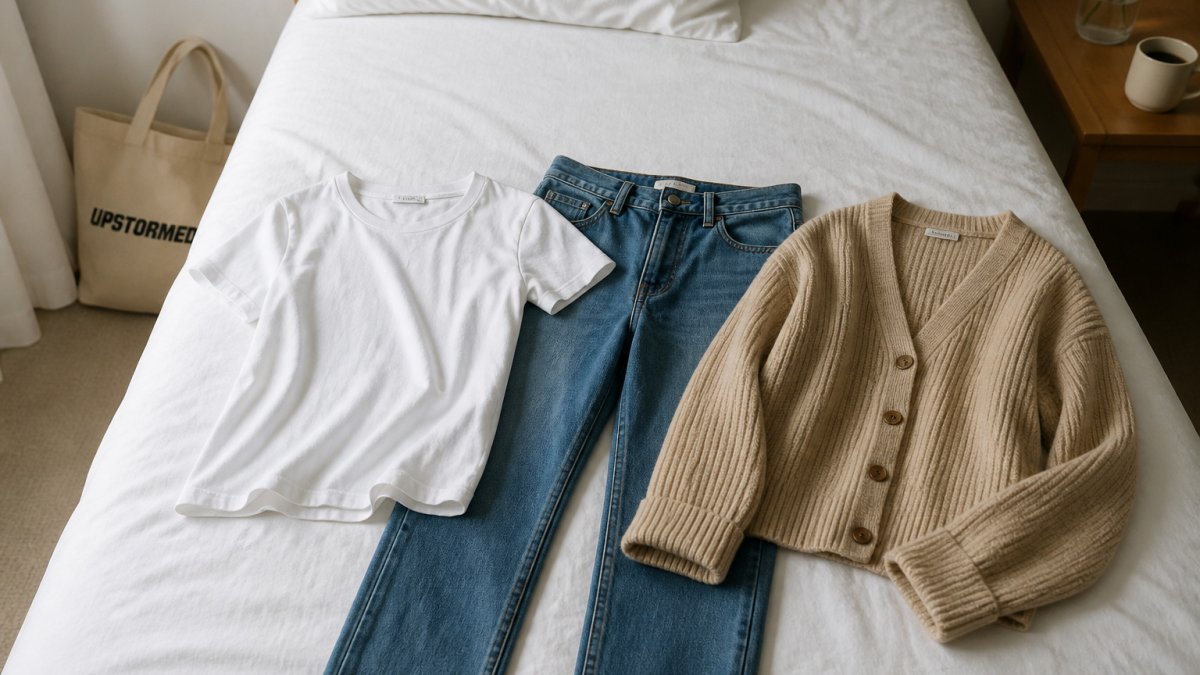
Woman arranging a white t-shirt, straight jeans, and a knit cardigan on a bed for a mix-and-match outfit set.

Judy Blue Full Size High Waist Straight Jeans →

Your Next Step: Shopping Smart and Maintaining Your Capsule

Budget capsules involve choices at the point of purchase and in the laundry room. If you want to explore options, visit Shop For Better.

The three-filter purchase test

Before you buy anything, run it through three filters:

  1. Palette filter: Does it match at least three colors already in your capsule?
  2. Outfit filter: Can you name three complete outfits using pieces you already own? If you cannot name them on the spot, do not buy it.
  3. Lifestyle filter: Does it fit the settings where you actually spend your week? A blazer is a bad buy for someone who works from home and never attends meetings.

If a piece passes all three, calculate cost per wear: divide the price by the times you realistically expect to wear it in a year. A $90 pair of jeans worn twice a week is about $0.87 per wear in year one; a $30 trend piece worn three times is $10 per wear. The cheaper item is often the more expensive one.

Secondhand shopping tactics that actually work

Secondhand shopping can be one way to stretch a capsule budget.

  • Shop with a list, not a mood. Bring your gap list and measurements. Thrift stores are designed to encourage browsing; a list keeps you focused.
  • Go on restock days. Most thrift stores restock on weekday mornings. Ask staff when new inventory hits the floor and shop then.
  • Check the men's and plus-size sections. A small women's sweater may fit better from the boys' section; a structured blazer may be cheaper in menswear. Sizing labels are a suggestion, not a rule.

Garment quality checks before you buy

Whether the item is new or secondhand, inspect it the same way:

  • Seams: Look inside. A straight stitch with no loose threads and no puckering is a good sign. A narrow, tight serge holds better than a wide, loose one.
  • Fabric content: Read the tag. Natural fibers and dense blends (cotton, linen, wool, silk) generally hold up better than thin, shiny synthetics. Stretch the fabric gently, if it does not spring back, it will bag out.
  • Hem and finishing: A deep hem can be let down or taken up; a shallow hem limits alterations. Check that buttons are secure and zippers run smoothly.
Watch Out Do not buy secondhand items that need structural repairs, replacing a zipper, relining a jacket, or rebuilding a hem can cost more than the item. Minor fixes (buttons, small seams, hems) are worth it; structural ones are not.

Maintenance that protects your budget

Maintenance is where a capsule either lasts or quietly falls apart:

  • Wash less, air more. Most knits and denim do not need washing after every wear. Air them overnight and spot-clean.
  • Wash cold and inside out. Cold water reduces shrinkage and dye loss; turning garments inside out protects against pilling and fading.
  • Air dry when you can. Dryer heat is the leading cause of shrinkage and elastic breakdown. Reserve the dryer for towels and sheets.

A simple monthly budget rhythm

Instead of buying a whole capsule at once, set a monthly capsule budget and spend it in priority order: repairs and alterations first, then gaps in your most-worn category, then one upgrade piece.

Upstormed offers apparel, books, and empowering music intended to inspire personal growth and resilience. Explore our collections at Upstormed and start building a capsule that works for your life.

Frequently Asked Questions

How do you start a capsule wardrobe on a budget?

Start by auditing what you already own so you know which gaps are real. Then list the roles your wardrobe must fill, such as work, weekends and workouts, and choose a small palette of two or three neutrals plus one accent color. Buy only the basics that fill gaps, and spread purchases over several months. Shopping secondhand and keeping a running wish list helps you avoid impulse buys and keeps spending under control.

How many pieces should a capsule wardrobe have?

Most capsule wardrobes use roughly 30 to 40 pieces per season, including tops, bottoms, layers, shoes and outerwear, though the exact count depends on your lifestyle. Counting only what you wear regularly keeps the number realistic. A budget version can work with fewer pieces if each one mixes with most of the others, so you get more outfits from less clothing.

What are the essential pieces for a budget capsule wardrobe?

Focus on a few versatile staples: two or three pairs of well-fitting jeans, a few plain tees in neutral colors, a knit cardigan, a button-down or blouse, a pair of tailored trousers, one dress or skirt, comfortable everyday shoes and a lightweight jacket. The Upstormed Judy Blue Full Size High Waist Straight Jeans are $64.50, and the Zenana Full Size V-Neck Short Sleeve T-Shirt is $14.58.

Related Post