

28 Oct
2026
Quick Summary
Mix vintage and modern furniture by first choosing one unifying element, like a repeated color, material or finish, before buying anything. Anchor each room with a modern base and add a few vintage pieces for character. Aim for roughly 70 percent modern and 30 percent vintage by visual weight.
Most people who try to mix vintage and modern furniture start by shopping. They fall for a great antique dresser, then a sleek sofa, and end up with a room that feels like two different houses. The fix is simpler than it sounds: pick one unifying element first.
A unifying element is a color, a material, a finish, or a shape that repeats across the room. Choose one and let it guide every purchase. A warm walnut tone, a brass accent, or a deep green palette can do the job.
Watch out: buying a single statement piece before you choose your unifying element often leaves you with a focal point that clashes with everything else in the room.
To apply this, do these three things before you shop:
Each room asks for a slightly different approach. A living room needs seating and a focal point that work together. A bedroom needs calm, and a dining room needs a table and chairs that feel connected.
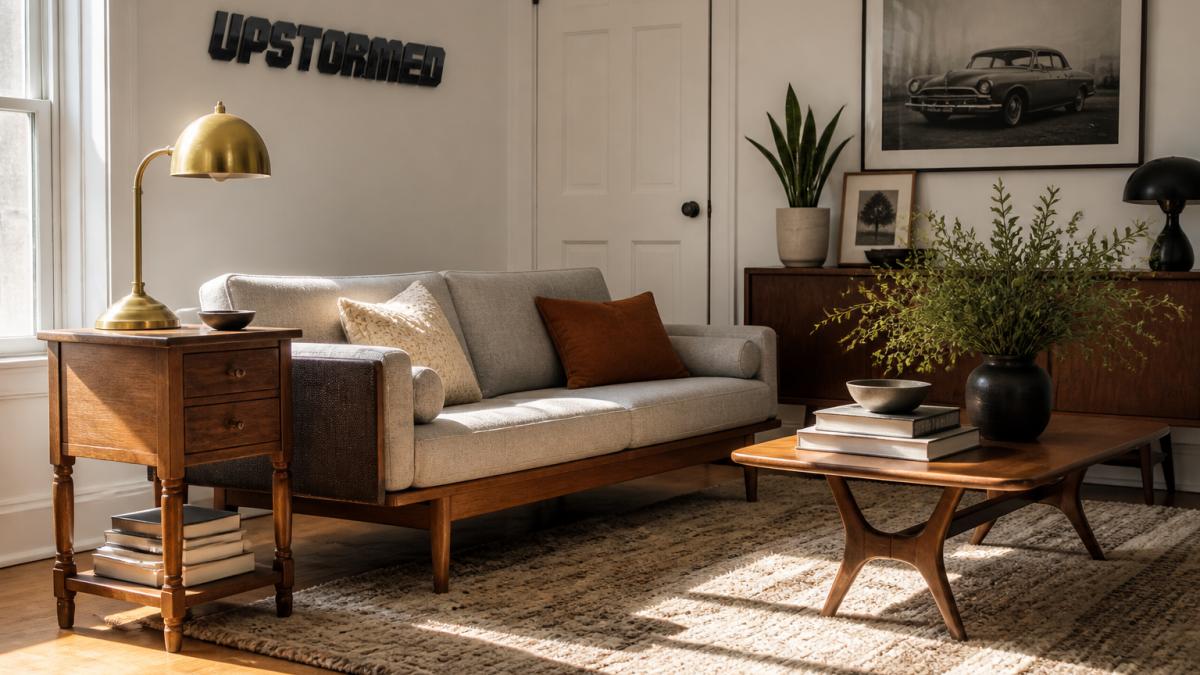
In a living room, start with a modern sofa in a neutral fabric. Then add one vintage armchair or side table in a warm wood tone.
In a bedroom, keep the bed and nightstands simple and modern. Add one vintage element, such as an antique dresser or a framed mirror with an ornate border.
In a dining room, pair a modern table with vintage chairs, or the reverse. Matching chairs are not required. Mismatched chairs in the same color or finish often look more intentional than a full matching set.
Proportion is where most vintage-modern mixes quietly fail.
Start with a 70/30 visual-weight split. Most designers who mix eras well land near 70 percent modern and 30 percent vintage by visual weight, not by piece count.
Use the three-question scale check before you buy.
Studded Vintage-Style Handbag →
Match silhouette to function. A vintage piece with a heavy carved base works best against a plain modern wall, where its shape is the focus.
Place by sightline, not by wall. Stand at the main entry to the room and note what you see first. That first-read piece should be your focal point.
Account for real dimensions, not catalog dimensions. Vintage furniture was built for different room sizes and ceiling heights. Measure doorways, stairwells, and elevator openings before you buy a large piece, and confirm the piece will clear any turns on the way in. A piece that fits the room but not the hallway is a costly mistake.
The article's scale check comes down to three measurements and one visual-weight target, which are easy to scan side by side.
| Check | Target | Note |
|---|---|---|
| Visual weight split | 70% modern / 30% vintage | Judged by visual weight, not piece count |
| Walking clearance | At least 18 inches | 30 to 36 inches in main traffic lanes |
| Sofa back height | About 32 inches | Reference point for height rhythm |
| Vintage floor lamp | Near 60 inches | Creates stair-step height rhythm |
| Low vintage coffee table | Around 16 to 18 inches | Pairs with taller pieces for rhythm |
Clutter is the most common problem with mixed-era rooms. It usually comes from too many textures, too many patterns, or too many pieces competing for attention.
A common mistake is treating every vintage find as a centerpiece. Choose one piece as the focal point, then let the others play supporting roles. Keep the surfaces around it clear. A single vintage bowl or a small stack of books can add character without crowding the room.
Edit as you go. After placing a piece, step back and ask whether the room feels calm or busy. If it feels busy, remove one accessory before removing a furniture piece.
A vintage piece feels modern when it is updated or styled to match a contemporary room. The easiest way is to change the finish or fabric. A worn wooden table can be refinished in a matte, neutral tone. An old chair can be reupholstered in a modern textile, like a linen blend or a solid-color performance fabric.
You can also modernize through placement and styling. Place a vintage piece against a plain, neutral wall so the eye focuses on its shape. For a concrete example of the look, browse the vintage style long leather wallet as a reference for the vintage-modern mix. Pair it with modern lighting, simple art, or clean-lined accessories.
The same idea applies to furniture: a classic shape in a contemporary finish reads as current.
Most styling guides stop at inspiration. The practical work, where to look, what to pay, what to fix, and what to walk away from, is where vintage-modern rooms actually get built.
Know your sourcing channels and their trade-offs.
Set a total-cost budget, not a sticker-price budget. For any vintage piece, budget the purchase price plus cleaning, repair, refinishing, reupholstery, and delivery.
Studded Vintage-Style Handbag →
Run a five-minute condition inspection.
Weigh restoration against replacement. Light cleaning, tightening joints, and waxing are low-risk and usually worth it. Refinishing changes the piece's character and can reduce value on antiques, so decide whether you want patina or a uniform finish before you sand anything.
Make vintage pieces safe and functional for daily use.
Negotiate with information. Ask sellers about provenance, prior repairs, and whether the piece has been refinished. Confirm dimensions in writing, and bring a tape measure and a photo of the intended space.
Plan the timeline. Good vintage pieces arrive on their own schedule. Set a target date for the room, buy the modern anchor pieces first, and let vintage finds fill in over weeks or months. A room that comes together slowly usually looks more collected and less staged than one assembled in a weekend.
Your first statement piece sets the direction for the whole room, so choose it carefully. You can browse a vintage style leather handbag to see how a bold accessory can be built around. The Studded Vintage-Style Handbag from Upstormed, for example, shows how a single bold piece can anchor an entire look.

Once you have your statement piece, build around it. Add one or two supporting pieces that echo its color, material, or shape. Then add smaller accents, such as a throw pillow or a plant, to finish the look. Work slowly. Most rooms come together over months, not in a single weekend.
Keep the goal in mind: a space that feels like yours. Mixing vintage and modern is not about following rules. It is about choosing pieces you love and making them work together.
Limit the room to a few strong pieces and give each one space. Pick one dominant style, then add the other style in smaller doses, such as a vintage rug under a modern sofa or a modern lamp beside an antique dresser. Keep a shared color palette of two to three tones and repeat them across both eras. Clear surfaces before adding accessories, and let one statement piece carry the room. If the room still feels busy, remove the smallest decorative items first rather than the furniture.
Balance comes from repeating a few elements across the room. Repeat a wood tone, a metal finish or a color so the eye connects the old and new pieces. Match the visual weight of the pieces by pairing a heavy antique cabinet with a substantial modern sofa rather than a delicate chair. Vary contrast deliberately: a sleek modern table works well against an ornate antique frame. Test the arrangement by stepping back from the doorway and checking whether one area dominates.
Neutral bases such as warm white, greige, camel and charcoal work well with both styles because they let the furniture's shape and material do the talking. Add one or two accent colors from the vintage piece, such as a faded teal in an antique rug, and repeat them in a modern cushion or print. Avoid more than three dominant colors in one room. Wood tones matter as much as paint: pair a dark walnut antique with a lighter oak modern piece only if a third wood tone ties them together.
Usually the problem is inconsistent quality and scale rather than the mix itself. Mismatched or damaged vintage pieces, cheap modern pieces in low-grade materials, and too many small accessories all make a room look unplanned. Choose fewer, better pieces in real wood, metal or natural fibers, and check that each piece is sized correctly for its wall or floor space. Clean, repair or refinish vintage items before placing them in the room.

Resilience coaching can build coping skills and workplace resilience, but is it worth the cost? C...

Swimwear trends 2026 bring sculpting fits, retro details, rich color, and cover-ups that move fro...

Build a capsule wardrobe on a budget with a starter checklist, realistic price ranges, and mix-an...

 Account
 Cart
