

07 Nov
2026
Last Updated: November 7, 2026
Quick Summary
Personal strength is the ability to keep going when life gets hard, and it is built through small, repeated habits rather than dramatic moments. You practice it by naming daily wins, setting boundaries, moving your body, and resetting after setbacks. Clothing that fits well and carries personal meaning can support that practice.
Personal strength is the ability to keep going when life gets hard. It is not about never struggling.
Most people think of strength as something big and dramatic. A job loss, a breakup, a health scare. But in daily life, personal strength shows up in quieter ways.
Here is what personal strength usually looks like in practice:
A common mistake is treating strength as a feeling. You don't need to feel strong to act strong.
Confidence and strength are linked, but they are not the same. As you practice responding with intention, choosing clothes that feel true to you can make that strength visible, and a 7-step style guide can help you shape that choice.
Self-love sounds soft, but it is one of the most practical tools for building resilience. When you treat yourself with basic respect, you make better decisions and bounce back faster. For a deeper look at this topic, read our guide on how to practice self love daily.
Start small. Pick one habit and do it for one week before adding another:
Watch out: Many people try to change five things at once, then quit by Friday. Pick one habit and keep it for a full week first.
Emotional strength is built through routine, not willpower. A few small daily habits can change how you handle stress over time. Start by learning how to start a resilience journal, which is one of the simplest tools for tracking progress.
Here are habits many people find useful:
For more ideas on steady routines, see our guide on how to build resilience through daily habits. Consistency matters more than intensity. Two minutes a day beats an hour once a month.
Clothing can be a quiet reminder of who you want to be. Many people wear a particular jacket before a big meeting or choose a bold color on a hard day.
The mechanism has a name.
Choose pieces that feel like you. If you are looking for pieces to build that wardrobe around, you can browse Shop For Better for apparel designed to support the way you want to show up.
Wondering whether this really works? Read can fashion choices improve self confidence for a closer look.
A garment only signals strength if it lets you move and breathe. Three practical checks before you commit to a "power piece":
Inclusivity is part of this, not a side note. Extended sizing, adjustable waists, and gender-neutral cuts widen the pool of pieces that can carry symbolic weight for you. A garment that fits properly is a garment you will actually reach for on a hard morning, and repetition is what turns a piece into a ritual.
You do not need a capsule wardrobe to do this. Pick three pieces and assign each a job:
Rotate them deliberately. Wear the grounding layer for hard conversations, the movement piece for reset walks, and the signal piece on days you need a reminder of past wins.
Watch out: Do not buy a "power outfit" for a version of yourself you have not met yet.
The article breaks down the practical checks and the simple wardrobe roles that make a strength-signalling outfit work day to day.
| Check or role | What to look for | Why it matters |
|---|---|---|
| Shoulder and armhole fit | Shoulder seam at the edge of the shoulder bone | Restrictive fit reads as less capable |
| Fabric recovery | Check the composition and care label for spandex | Helps the piece hold its shape through a long day |
| Sizing honesty | Compare your measurements to each brand's size chart | Vanity sizing varies widely between brands |
| Grounding layer | Jacket, overshirt, or cardigan | Signals a shift into work mode |
| Movement piece | Leggings, joggers, or a loose top | Suits walks, stretching, and reset moments |
| Signal piece | One item tied to a past win | Reminds you of moments you handled well |
On tough days, pick clothes that are comfortable and easy to move in. Comfort lowers stress, and a put-together look can help you feel more prepared.
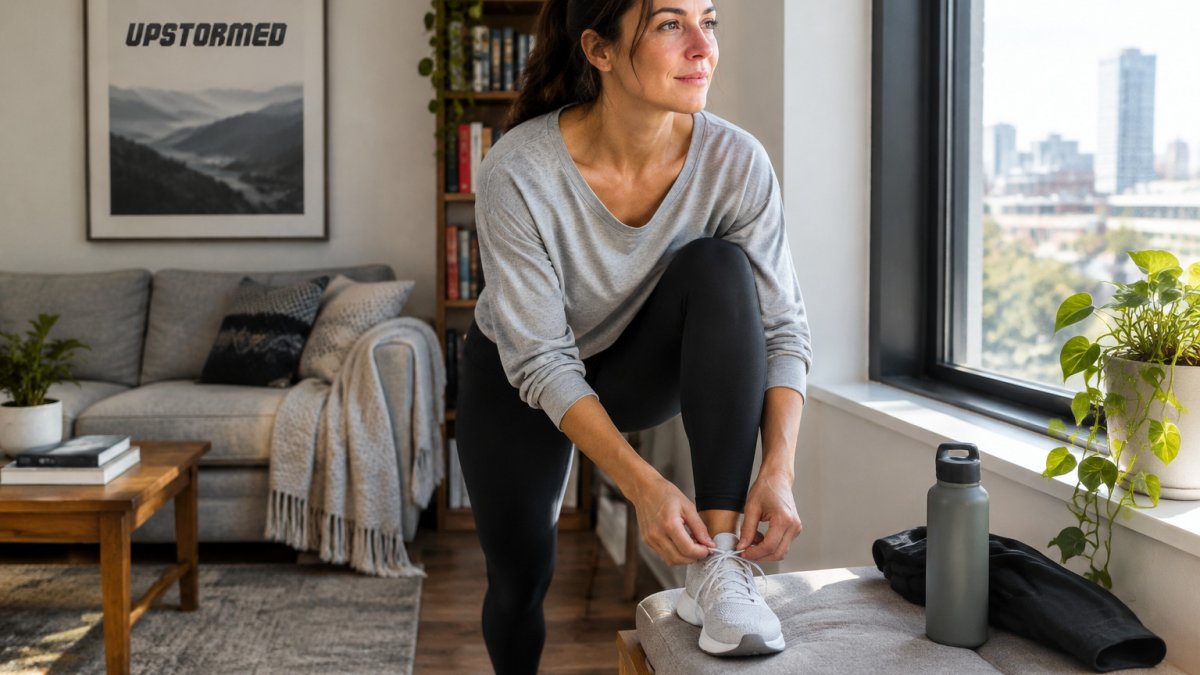
Some combinations to try:
Our approach is simple: wear something you like, something that fits, and something you can move in. Then get on with your day.

Progress is easy to miss when you only look at big results. Track small signals instead, and track them against a baseline so you can see movement rather than just mood.
Before you change anything, write down where you are. Keep it to five numbers or ratings you can repeat:
A baseline turns vague feelings into something you can compare. Without it, a good week and a bad week blur together.
Resilience looks different depending on where you sit in the apparel world. Pick the row that fits you and track one number for a month:
These are not vanity numbers. Each one gives you a concrete answer to "am I actually getting stronger at this, or just busier?"
A weekly review is the right rhythm for most people, but keep it to ten minutes:
Once a month, zoom out. Compare this month's numbers to your baseline. Look for trends, not single data points, three weeks of improving recovery time means more than one great day.
Watch out: Do not turn tracking into a second job. If the review takes longer than ten minutes or you start skipping it because it feels like homework, cut the list to two metrics and keep the habit alive.
A flat month is information, not failure. Check three things before you change your approach: sleep and rest (resilience metrics fall before mood does), whether the habit still fits your schedule, and whether you are measuring something you can actually control.
For more ideas on steady routines, see our guide on how to build resilience through daily habits. Consistency matters more than intensity, and that applies to measurement too. Two minutes a day beats an hour once a month.
Strength grows from small, repeated choices. Pick one habit from this guide and one piece of clothing that makes you feel capable, then use both this week.
Upstormed offers apparel, books and music designed to help you express who you are and keep moving forward. Explore the collection, start with one habit, and build from there.
Strength usually builds through repeated small actions rather than one big change. Pick one daily habit you can finish in under 15 minutes, such as a short walk, a journal entry about one thing that went well, or a planned rest break. Repeat it for two weeks before adding another. Track whether you feel steadier after hard moments, not just whether you completed the task. Over several months, the pattern of showing up on difficult days becomes the real source of resilience, and it is something you can practice whether life feels easy or heavy.
Habits that help most are simple and repeatable: a consistent sleep and wake time, a few minutes of movement, one honest check-in with yourself each evening, and a short plan for the next morning. Wearing clothes that make you feel capable can support these routines too. Many people find that a fixed morning ritual, such as getting dressed in an outfit they like before opening email, sets a steadier tone for the day. Start with one habit, keep it small enough to repeat on bad days, and build from there.
Clothing cannot create strength on its own, but it can serve as a daily reminder of the person you are working to become. Choosing pieces that fit well, feel comfortable, and reflect your personal style can make it easier to move through a demanding day. Our Women's Skinny Yoga Pants for Sports and Fashion, priced at $43.87, come in a high-waisted, stretchy fit that works for workouts and errands alike. The key is to choose what supports how you want to feel, then pair it with the habits that build real resilience.
Self-love during hard periods often looks practical rather than dramatic. Speak to yourself the way you would speak to a friend, set one boundary that protects your energy, and schedule at least one activity you enjoy each day, even if it is brief. Notice when you are being harshly self-critical and write down one fair, kinder statement. If the difficulty feels overwhelming or lasts for weeks, consider talking with a licensed mental health professional, who can offer support beyond what any self-help routine can provide.

Music and reading can work together when you pick the right audio for the task. Learn a simple st...

Learn how to style a midi dress for day to night with shoes, layers, bags and jewelry swaps. A pr...

Activewear trends 2026 bring sculpting fits, soft layers, expressive color, and real-world versat...

 Account
 Cart
